
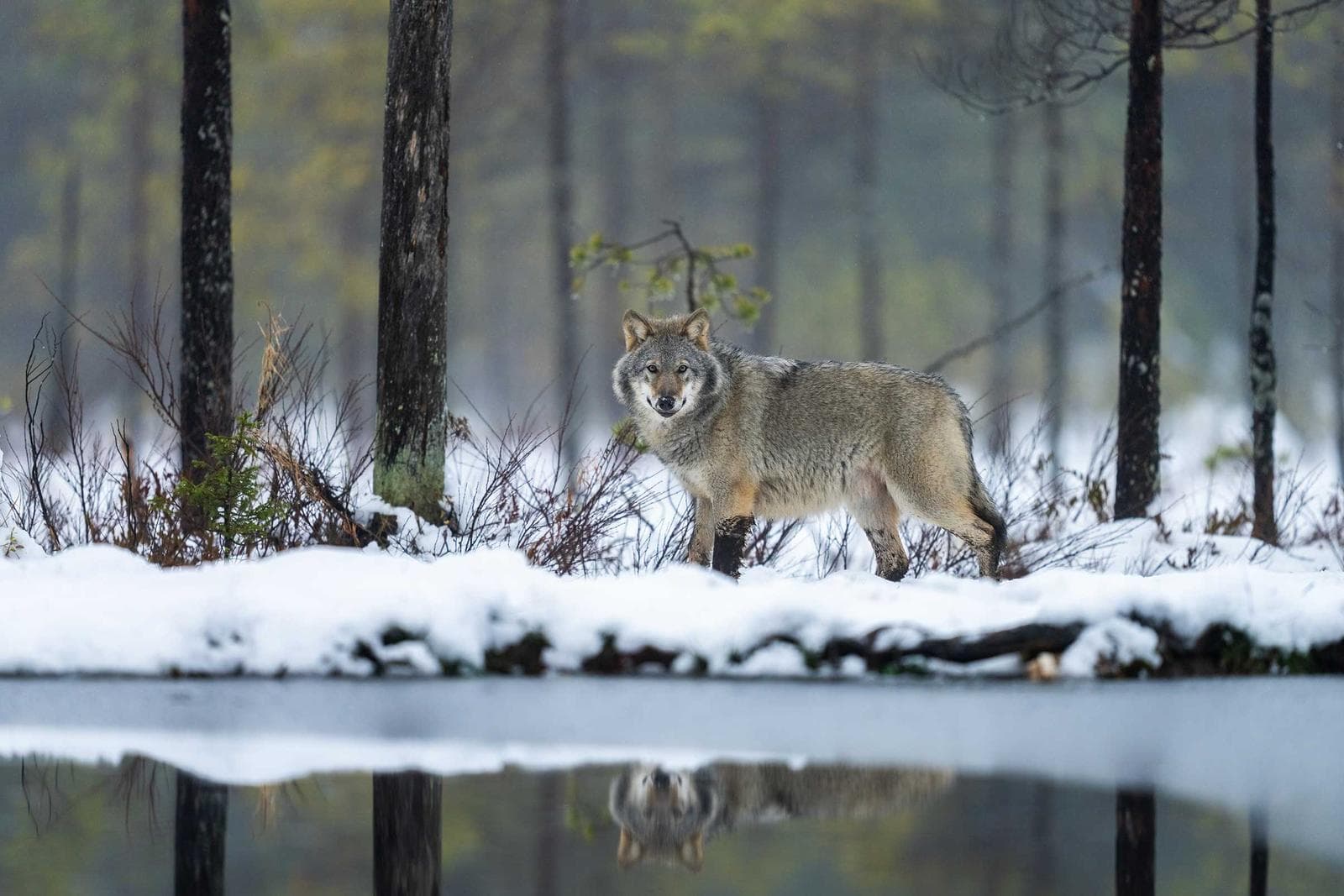
Finland is Europe's premier destination for photographing large predators in the wild. At the Finnish-Russian border, in the vast taiga of eastern Finland, a network of professional bear hides has emerged that gives nature photographers a unique opportunity: to photograph brown bears, wolves and wolverines at close range in the midnight sun.
What makes Finland exceptional is the combination of reliable sightings and spectacular light. During the summer months (June–August) the sun never really sets in northern Finland, and even in eastern Finland the usable light lasts 20+ hours. The bears come to the baiting sites during the bright nights — when most tourists are sleeping — giving photographers hours of activity in a warm, golden light that exists nowhere else in Europe.
Area
338 000 km²
Brown bears
2 300+
Wolf packs
~50
Best season
Apr–Sep
Brown Bear — King of the Taiga
Finland's brown bear population (approximately 2,300 individuals) is concentrated in the eastern parts of the country, near the Russian border. Here the bears roam freely between Finland and Russia through the endless taiga. Professional bear hides — solid wooden structures with comfortable beds and photography openings — are placed at baiting sites that the bears regularly visit.
A typical session begins in the afternoon and continues throughout the night. The bears often arrive at 7:00–9:00 PM and can be active until the morning hours. During the midnight sun in June–July, everything happens in warm golden light. Large males, females with cubs, and young bears create rich social drama with hierarchy battles, playful cubs and cautious encounters.
The distance from hide to bait is typically 10–30 meters, providing frame-filling images with 300–500mm telephoto lenses.
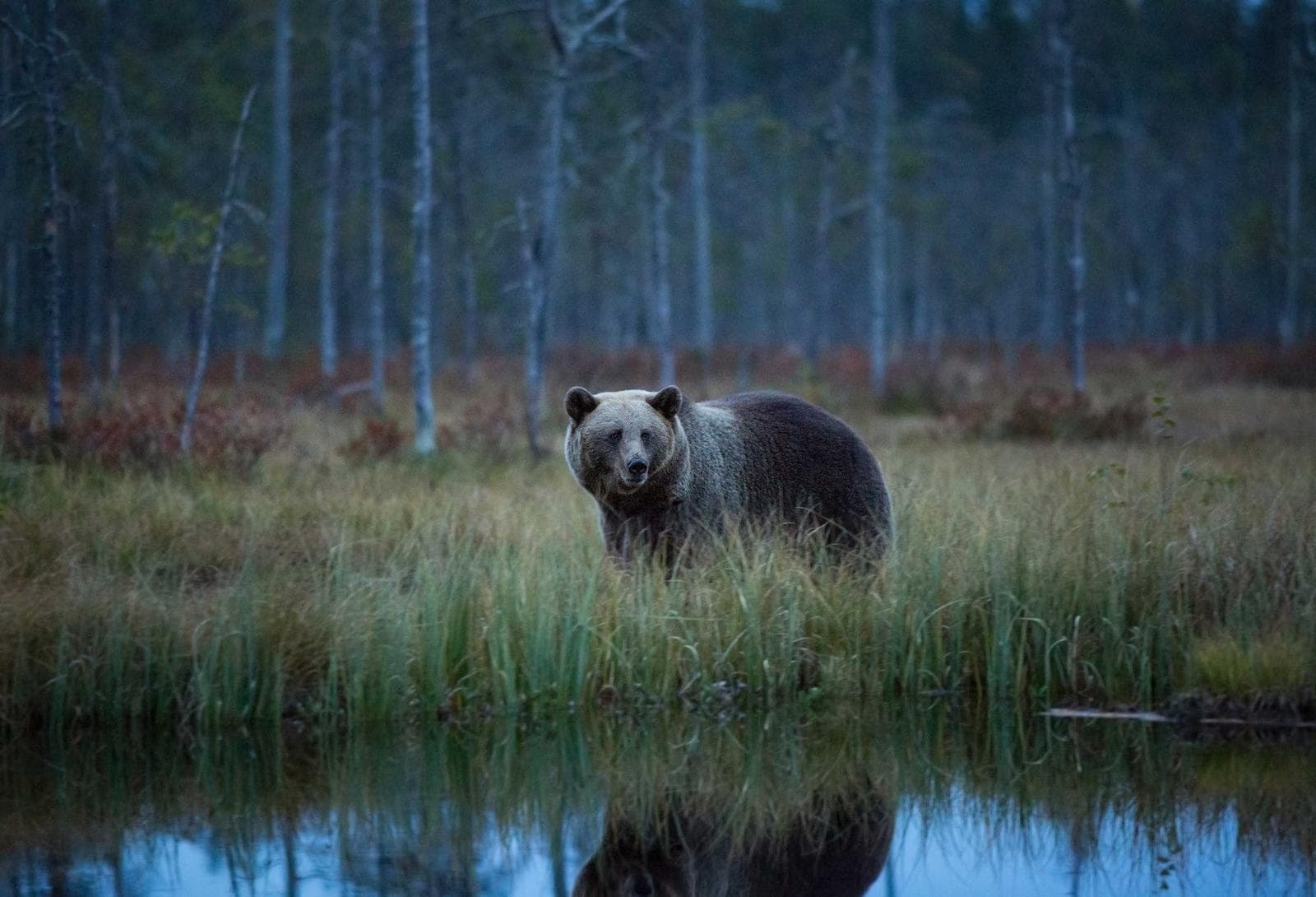
Brown Bear (Ursus arctos)
Europe's largest land-dwelling predator, with males that can weigh up to 350 kg in Finland. From hides at the Russian border you can photograph bears at 10–30 meter distance under the midnight sun. The female's interaction with cubs — playful, tender and vigilant — provides visual stories with strong emotional impact.
Bear Photography in Midnight Sun
The low midnight sun light creates magical colors but requires adapted technique. Raise ISO to 1600–3200 during the darkest hours (01:00–03:00). Use wide apertures (f/4–5.6) and accept shutter speeds down to 1/250s for stationary bears. Backlighting through the forest creates dramatic silhouette effects. Silent shutter mode is important — bears react to mechanical shutter sound.
Wolf — The Elusive Shadow
Finland has approximately 50 wolf packs, mainly in the eastern parts of the country. Photographing wolves from hides is significantly more difficult than bears — wolves are more intelligent, cautious and visit baiting sites more irregularly. But when it succeeds, the reward is enormous: a wild wolf in midnight sun, with the boreal taiga as backdrop.
Wolf season extends from April to September, with best chances in June–July. Wolves typically visit the baiting site during the darkest hours (23:00–03:00), and sessions may require 2–3 nights in the hide before a wolf appears. Patience is key, and the mental moment when a shadow suddenly materializes at the forest edge — that's an experience that makes all hours of waiting worthwhile.
Wolverine — The North's Most Difficult Animal to Photograph
The wolverine (Gulo gulo) is one of the world's most elusive animals to capture on camera. It lives in low densities, moves across enormous home ranges and is extremely shy. However, Finland offers the best opportunities in Europe thanks to specialized hides in the Kainuu region.
Wolverines visit baiting sites irregularly — sometimes several nights in a row, sometimes with week-long breaks. Their muscular build, dark fur and intense facial expressions create portrait images with raw power. Capturing a wolverine on camera in the wild is a merit that few nature photographers can claim.
| Months | Season | Description | Rating |
|---|---|---|---|
| Apr–May | Early season | Bears wake from hibernation. Snow remains in forest provides contrast. Light increases rapidly. | |
| Jun–Jul | Peak season | Midnight sun. Bears with cubs. Best wolf chances. 20+ hours usable light. | |
| Aug | Late summer | Bears feed intensively before winter. Darker nights create atmospheric images. Wolverine chance. | |
| Sep | Autumn | Autumn colors in taiga. Bears prepare for hibernation. Last chance before winter. | |
| Oct–Mar | Winter | Hides closed. Bears in hibernation. Extreme cold. Owls and grouse possible. |
Equipment for Finland
Camera Bodies
Full frame with excellent high-ISO performance (ISO 3200–6400 without quality loss) — the midnight sun provides beautiful light but lower intensity. Silent shutter mode is important in hides. Bring two camera bodies — one with telephoto, one with shorter lens for environmental shots.
Lenses
- 300–500mm telephoto — main lens for bears at 10–30 meter distance
- 600mm f/4 — for wolves and wolverines that keep greater distance
- 70–200mm f/2.8 — for environmental shots and bears that come close to the hide
Hide-Specific
- Beanbag (stable support without tripod limitations)
- Mosquito net and repellent (Finnish mosquitoes in June–July are legendary)
- Warm clothes even in summer — nights in hides at +5°C require down-filled jackets
- Thermos with coffee and sandwiches for 12+ hours in hide
- Sleeping pad or mattress (sleep between bear visits)
Why Finland?
- Europe's best bear photography — Professional hides with 95%+ chance of seeing brown bears during peak season
- Midnight sun — 20+ hours of golden light per day provides opportunities that don't exist elsewhere
- Wolf and wolverine — Among the only places in Europe where these species can be photographed from hides
- Close and convenient — Short flight from Stockholm, transfer bus to hide area, everything arranged
- Unique hide experience — Spending a midnight night alone in the forest, with bears wandering past your window, is a life experience beyond the ordinary