Canada is a dream destination for nature photographers seeking Nordic wildlife in genuinely wild environments. The boreal forests of Manitoba and Ontario host one of the world's densest populations of Great Grey Owls — a species that is nearly impossible to photograph reliably elsewhere. During irruption years, Snowy Owls can also be seen in large numbers on the prairie lands.
What makes Canada unique for the nature photographer is the authentic wilderness experience. Here you're not photographing animals in semi-tame conditions — you're out in genuine boreal forest at −30°C, with steam rising from your breath while a Great Grey Owl glides silently between the spruces. It demands a lot from both photographer and equipment, but the reward is images with an authenticity and atmosphere that are difficult to replicate.
Area
9 985 000 km²
Great Grey Owls
ca 15 000
Wolf Population
50 - 60 000
Best Season
Nov–Mar
Great Grey Owls — the boreal forest's ghost
The Great Grey Owl (Strix nebulosa) is North America's largest owl by length and one of nature photography's most sought-after species. With its massive facial disc, intense yellow eyes and silent hunt in the boreal forest, it's a subject that never ceases to fascinate.
Manitoba, particularly the area around Winnipeg and the boreal forest north of the city, is the world's most reliable place for Great Grey Owls during winter. The owls hunt along forest roads and farmland at dawn and dusk, and can sometimes remain perched on the same post or treetop for hours. The best time is January–March, when prey animals (voles) are active beneath the snow and the owls hunt intensively.
Great Grey Owl (Strix nebulosa)
North America's longest owl with a facial disc up to 50 cm in diameter. Great Grey Owls hunt by listening for voles beneath the snow and diving straight through the snow cover. The dramatic moment when the owl strikes — with outstretched talons through the snow surface — provides action shots of rare beauty.
Photography in extreme cold (−20°C to −40°C)
Battery capacity is halved at −20°C — bring at least 4–6 fully charged batteries and store them in an inner pocket against your body. NEVER breathe on the viewfinder or lens (condensation freezes immediately). When changing environments (car to outside temperature) let the camera acclimatize in the bag for 15 minutes. Always wear thin inner gloves — bare skin against metal at −25°C causes frostbite in seconds.
Snowy Owls — the prairie's white ghost
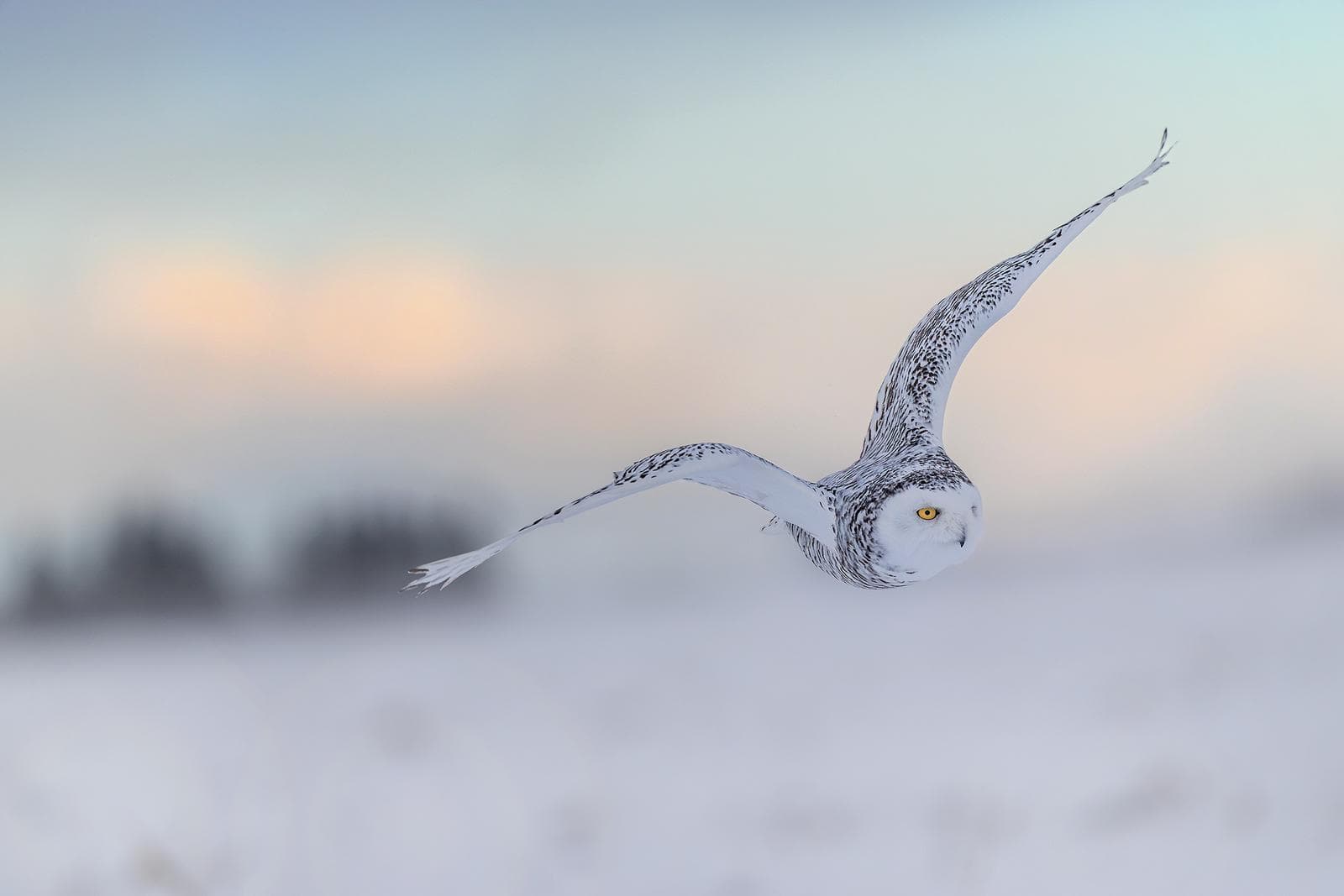
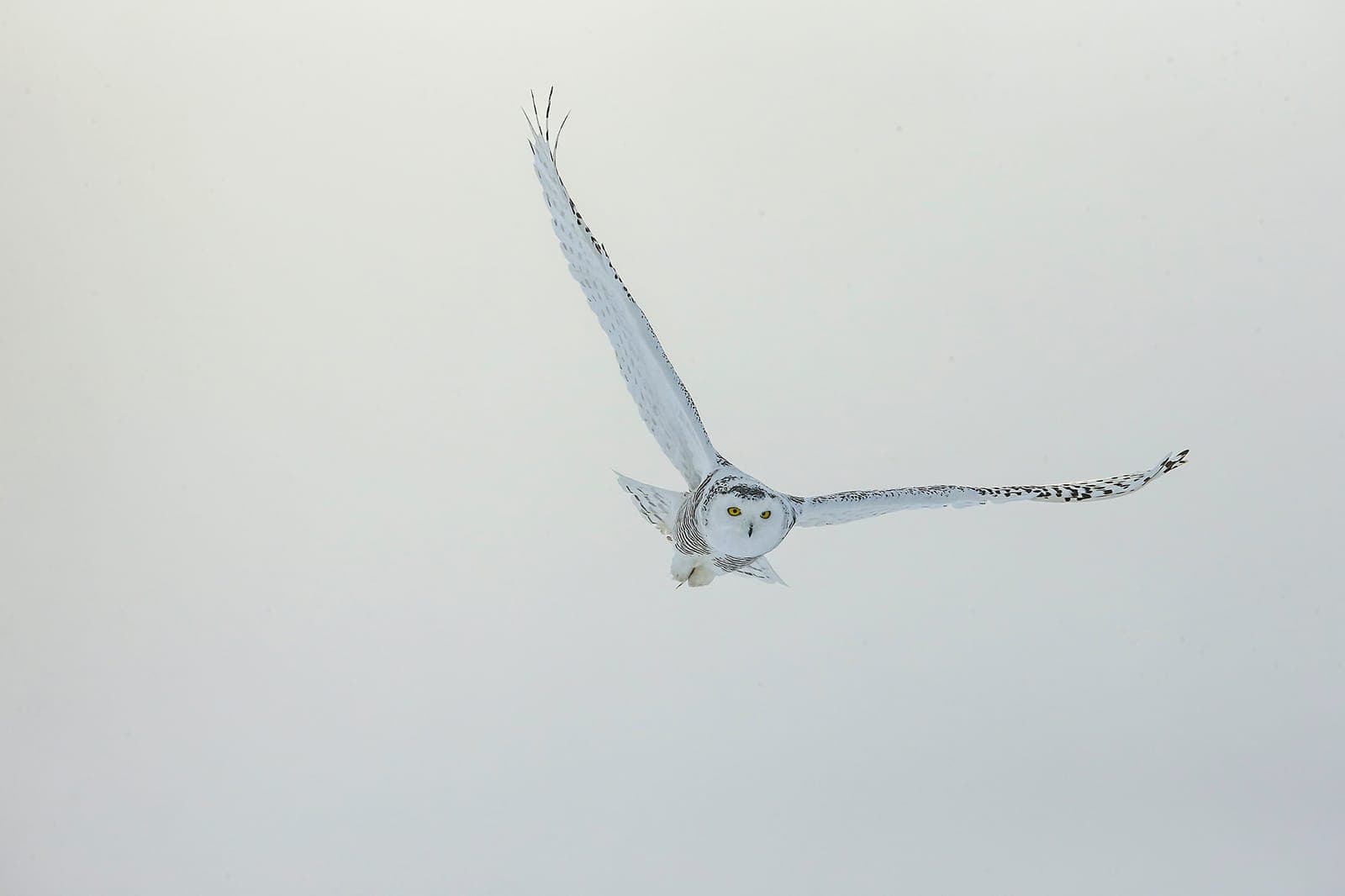
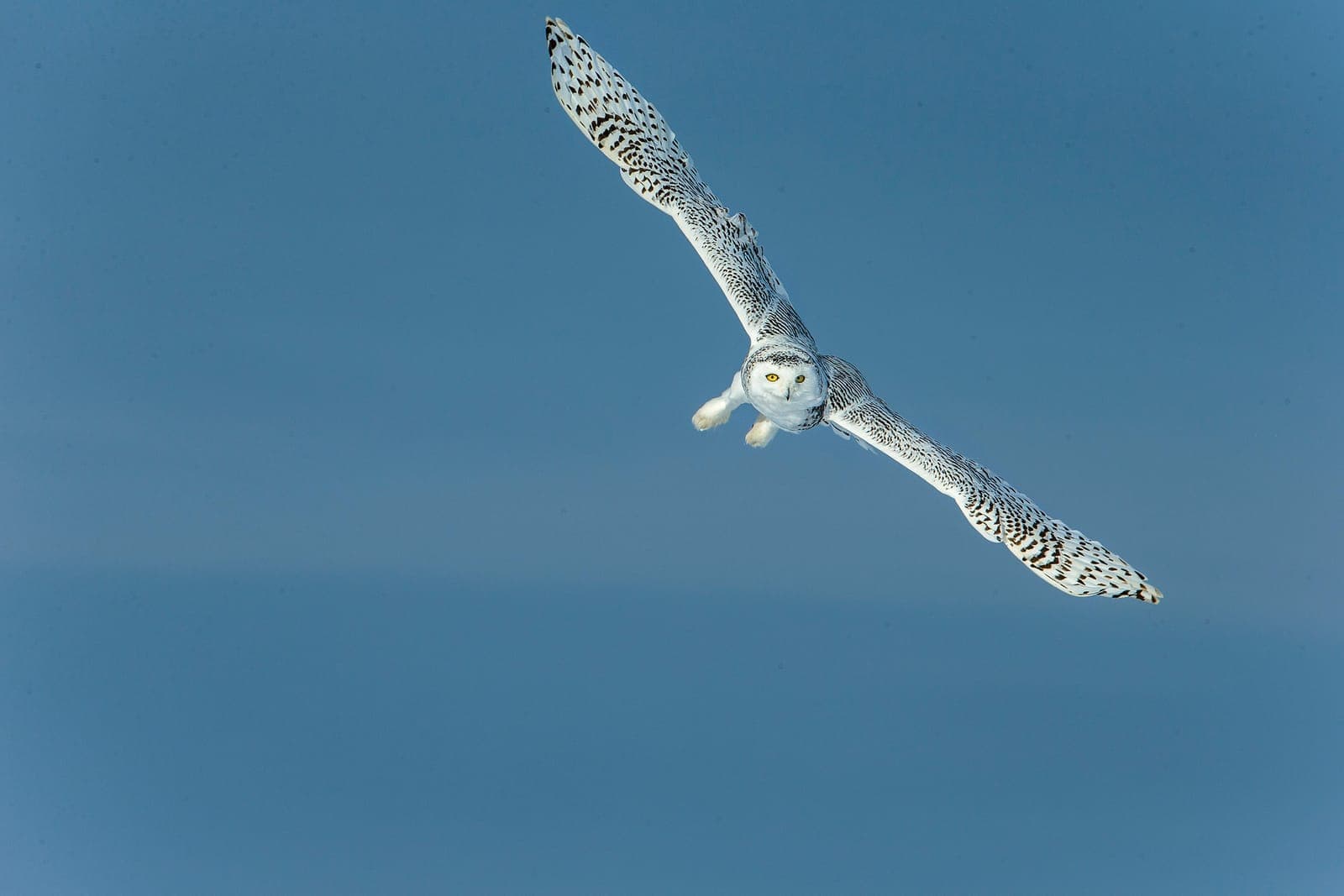
The Snowy Owl (Bubo scandiacus) overwinters on the open prairie lands of southern Manitoba, Saskatchewan and Ontario. During good years — when the lemming cycle in the Arctic has produced many young — dozens of Snowy Owls can be seen in a single day.
Snowy Owls typically perch on posts, hay bales and low hills where they scan the terrain for prey. The white plumage against a snow landscape in golden morning light creates minimalist images with enormous visual power. Flight shots require quick reflexes — Snowy Owls take off silently and unexpectedly.
Wolf — the ultimate challenge
Canada hosts one of the world's largest wolf populations with an estimated 50,000 to 60,000 animals. However, photographing wolves in the wild requires patience, local knowledge and often a specialist guide. The best opportunities are found in Riding Mountain National Park (Manitoba), Algonquin Provincial Park (Ontario) and Yukon.
The winter period (December–March) is best — wolf tracks are clearly visible in snow and packs move more actively. Wolf feeding scenes at carcasses can continue for days and provide unique opportunities if you find the right position. Telephoto lenses with 600–800 mm focal length are often necessary — wolves keep their distance.
| Months | Season | Description | Rating |
|---|---|---|---|
| Late Oct–Nov | Early Winter | Snowy Owls arrive. Great Grey Owls begin active hunting. Short daylight but beautiful light. | |
| Dec–Feb | Peak Season | Best time for Great Grey and Snowy Owls. Wolf tracks in snow. Extremely cold but fantastic light. | |
| Apr–May | Spring | Owls nesting. Bears awakening. Meltwater and new greenery. Longer days. | |
| Jun–Aug | Summer | Bear photography. Young owls. Buggy. Long days with midnight sun in the north. | |
| Sep–Oct | Autumn | Moose rut. Autumn colors in boreal forest. Early snow in the north. |
Equipment for Canada (extreme cold)
Camera Body
Weather-sealed full-frame body is an absolute requirement. Battery grip provides extra battery capacity that is vital in cold conditions.
Lenses
- 400mm - 600 mm f/4 — the standard lens for Great Grey Owls, provides frame-filling images at 15–25 m
- 100–400 mm zoom — flexible for varying distances and Snowy Owls
- 70–200 mm f/2.8 — for environmental shots of winter landscapes with animals
Clothing and survival (as important as the camera!)
- Layering system: base layer in merino wool, mid-layer in fleece/down, outer windproof shell
- Double mittens: thin inner photography gloves + thick outer mittens with quick release
- Chemical hand warmers in mittens, pockets and camera battery compartment
- Face mask and ski goggles at −30°C and wind
- Warning: at −40°C (with wind chill) exposure time for bare skin is limited to under 5 minutes
Why Canada?
- World-class Great Grey Owls — Manitoba is the most reliable place on earth to photograph Great Grey Owls during winter
- Snowy Owls on the prairie — During good years you can photograph dozens of Snowy Owls in a day
- Genuine wilderness — No fences, no semi-tame animals — authentic nature photography in arctic environment
- Wolf opportunities — One of few places where wolves can be photographed in wild state with the right guide
- Dramatic winter landscape — Snow-covered boreal forests and open prairies provide minimalist, powerful backgrounds