Mana Pools National Park in northern Zimbabwe is a UNESCO World Heritage site since 1984 and one of Africa's most exclusive destinations for nature photography. The name "Mana" means "four" in the local Shona language and refers to the four permanent pools created by the Zambezi River. The park spans 2,196 km² and is world-renowned for its unique animal behaviors — particularly the elephants that stand on their hind legs to reach acacia seeds, a phenomenon not observed anywhere else.
Unlike most African parks, Mana Pools offers walking safaris — you photograph wildlife on foot with experienced guides, providing an intimacy and presence that is impossible from a vehicle.
Area
2 196 km²
UNESCO status
Sedan 1984
Bird species
450+
Best season
Jul–Okt
The Elephants — Mana Pools' signature
The most famous phenomenon in Mana Pools: elephants standing on their hind legs to reach acacia seeds and leaves high up in the trees. This unique behavior exists only in Mana Pools and has made the park world-famous among wildlife photographers. The behavior is most frequent during the dry season (May–October) when acacia trees bear fruit and ground vegetation has dried out.
During the dry season, enormous wildlife concentrations gather around the permanent pools, creating unparalleled photography opportunities with elephants, lions and antelopes — all within the same frame.
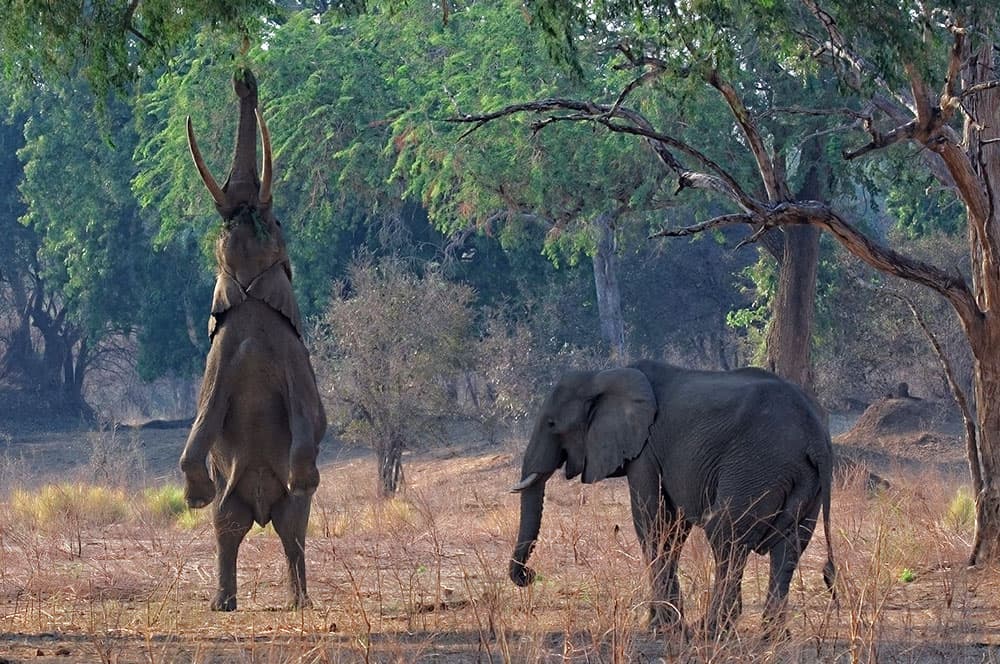
African elephant (Loxodonta africana)
Mana Pools elephants have developed the unique behavior of standing on their hind legs to reach food high up in acacia trees. This balancing act — with animals weighing up to 6 tons — provides iconic image sequences that exist nowhere else on earth. Best time: August–September.
Elephant photography on foot
Walking safaris give you eye-level perspective that creates powerful compositions. Use 70–200 mm f/2.8 for environmental portraits and 400–600 mm for behavioral details. Keep continuous autofocus activated — elephants move quickly when standing up. Best times: 06:00–08:00 and 17:00–19:00.
More species to photograph
Mana Pools' biodiversity extends far beyond the elephants. The park's unique combination of river ecosystem, floodplain and dry forest creates a mosaic of habitats that house Africa's most sought-after photo subjects.
African wild dogs
Mana Pools hosts one of Zimbabwe's largest populations of African wild dogs — one of the continent's most endangered carnivore species with fewer than 6,600 individuals left in the wild. Their complex pack structure and coordinated hunting techniques offer dramatic image sequences, especially during dawn and dusk.
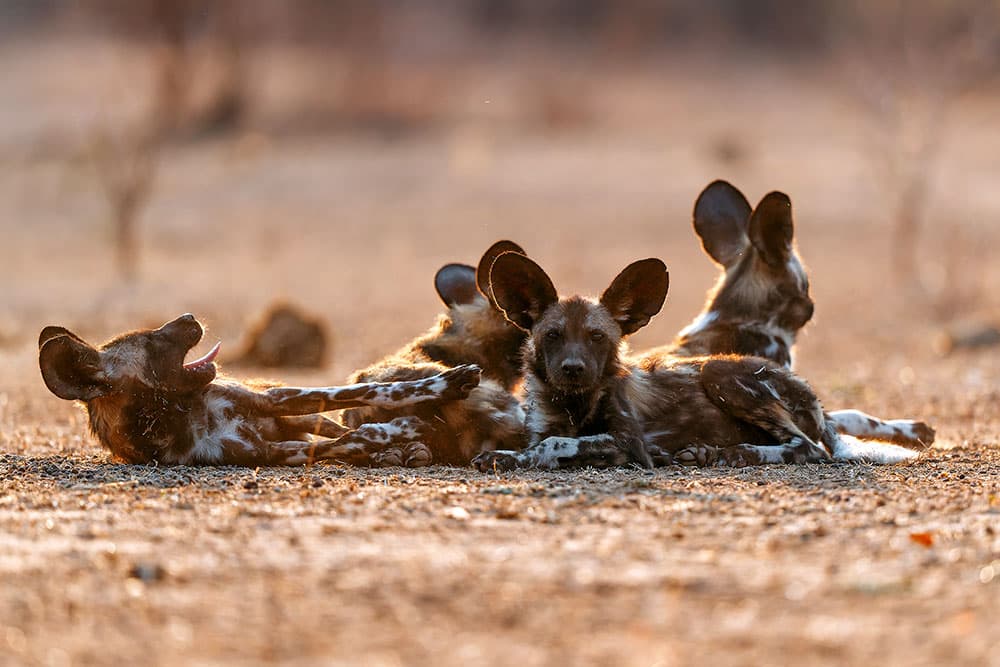
African wild dog (Lycaon pictus)
The wild dogs in Mana Pools hunt in coordinated packs with impressive strategic precision. Their unique coat patterns make each individual unique — perfect for portrait photography. During denning season (June–August) the packs stay near their dens, providing predictable and intimate photo opportunities.
Zambezi lions
The Zambezi Valley lion population is known for its impressive size and unique hunting strategies by the river. During the dry season, lions gather at the permanent pools, creating extraordinary photography opportunities when they hunt prey that comes to drink.
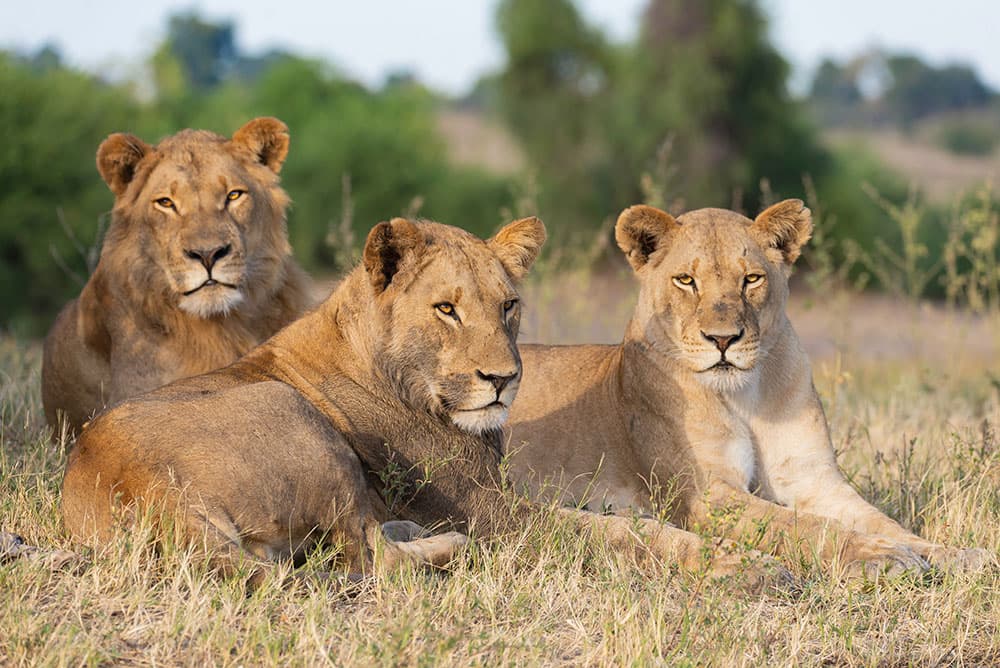
African lion (Panthera leo)
The lions in Mana Pools are adapted to the river ecosystem and regularly hunt at waterholes. During full moon nights you can capture dramatic scenes of lions hunting in the silvery light — one of Africa's most sought-after photo subjects.
Hippos — over 1,000 individuals
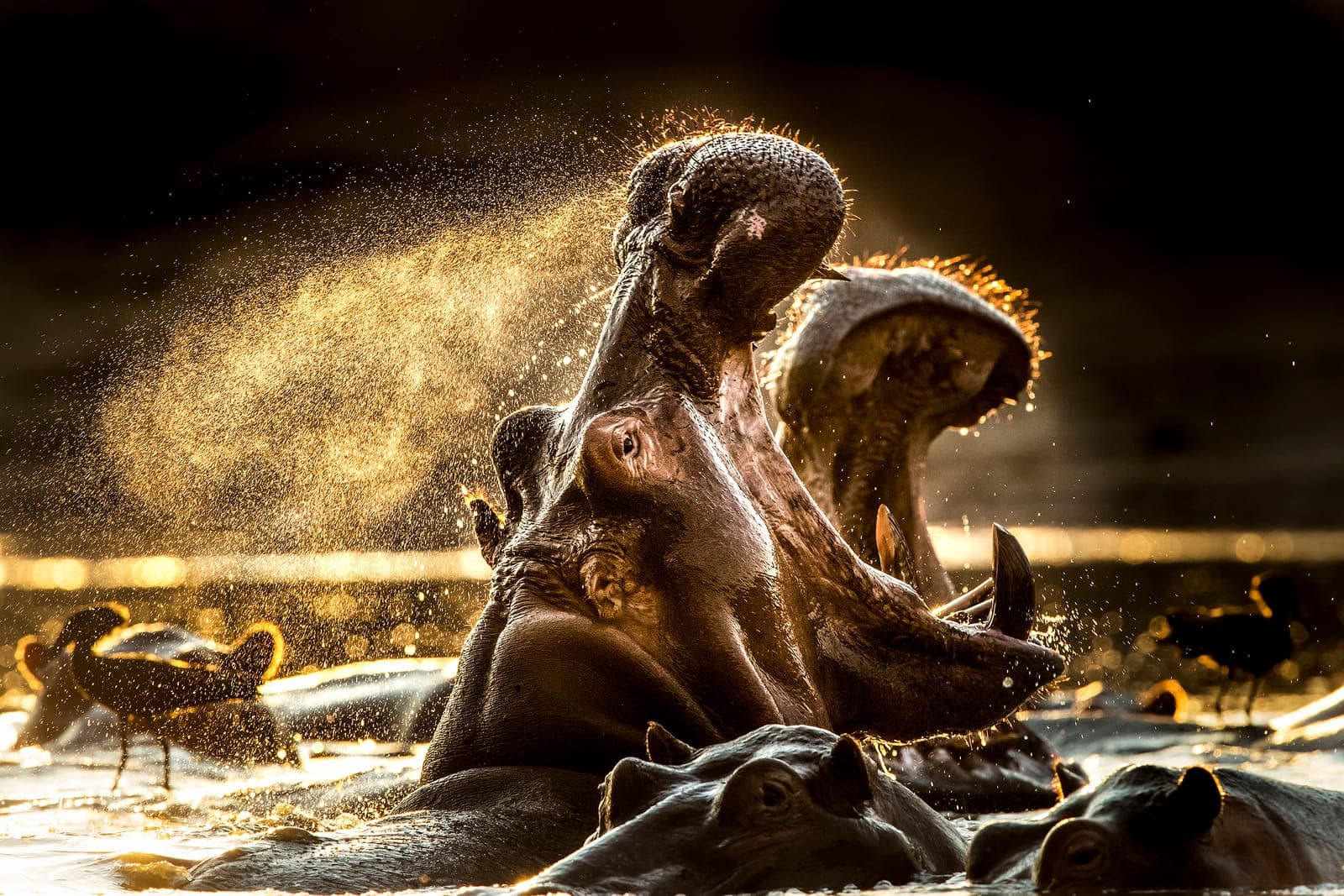
The four permanent pools house over 1,000 hippos — one of Africa's largest concentrations. Their territorial displays and dramatic conflicts provide powerful images, especially in golden morning and evening light.
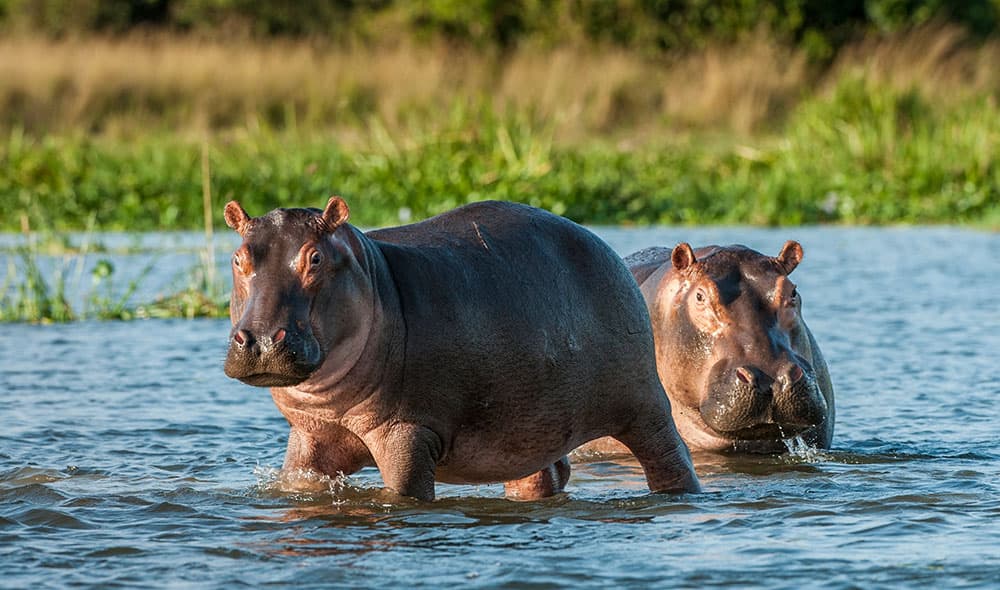
Hippopotamus (Hippopotamus amphibius)
The hippos' territorial fights with wide-open jaws provide some of Africa's most dramatic animal portraits. At sunset, entire pods leave the water for nocturnal grazing — a magical sequence to photograph in silhouette against the colored sky.
Nile crocodiles — Zambezi's giants
The Zambezi River houses some of Africa's largest Nile crocodiles, many over five meters long. These prehistoric predators offer dramatic images when basking on sandbanks or hunting at the pool edges.
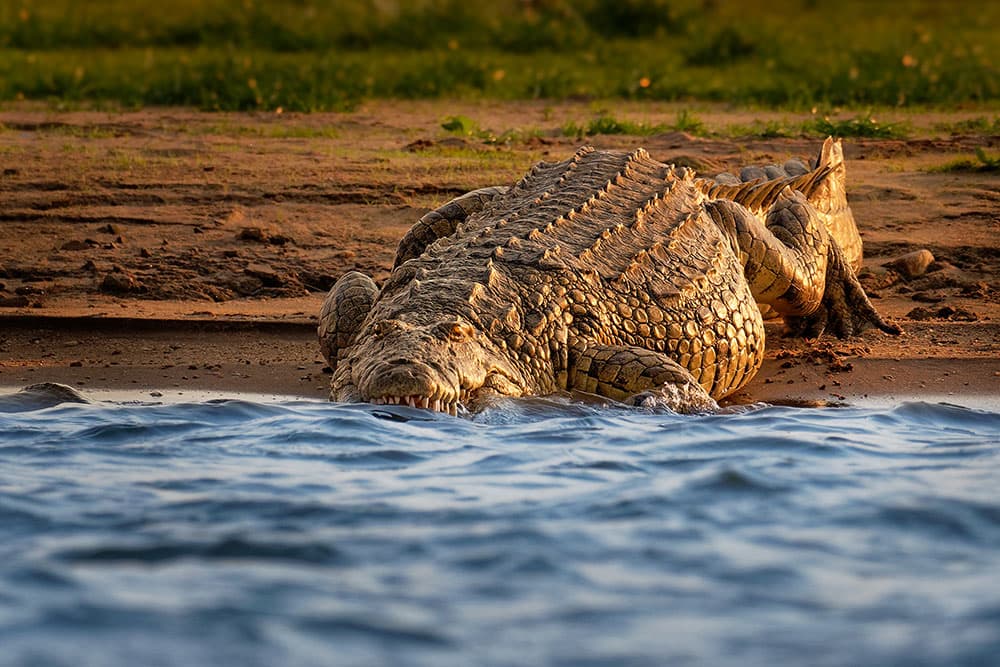
Nile crocodile (Crocodylus niloticus)
The Zambezi's Nile crocodiles are among Africa's largest. Photograph them up close from river boats during golden hour — sunlight on their armor-like scales creates beautiful textures and detail shots.
Birds — 450+ species
Mana Pools is a paradise for bird photographers with over 450 species, including the iconic African fish eagle (Zimbabwe's national bird), colorful bee-eaters, majestic ground hornbills and numerous waders. The best time for bird photography is October–March when migrants arrive and local species breed.
Bird photography at Zambezi
Fish eagles are easiest to photograph early morning (06:00–08:00) when they hunt. Use 500–600 mm telephoto lenses with fast shutter speed (at least 1/2000 s) to freeze dives. Water reflections in early morning light create fantastic compositions with mirror images.
Best season for photography
The dry season (July–October) is absolutely the best time for wildlife photography in Mana Pools. The park is closed to regular visitors from mid-November to April due to rainy season and flooded roads.
| Months | Season | Description | Rating |
|---|---|---|---|
| Jul–Sep | Peak season | Maximum wildlife concentrations at the pools. Clearest weather, consistent golden light. | |
| Oct | Hot but spectacular | Most intense animal activity. High temperatures (35°C+), but animals are desperate for water. | |
| May–Jun | Shoulder season | Green landscapes, cooler temperatures (18–24°C). Fewer tourists, good prices. | |
| Nov–Apr | Closed | Park closed. Rainy season with flooded roads. Inaccessible. |
Equipment for Mana Pools
Camera bodies
Weather-sealed full-frame camera is a must in Mana Pools' dusty environment. Bring at least two camera bodies — walking safaris mean quick lens changes aren't always possible. Fast autofocus is crucial for predator interactions.
Lenses
- 400–600 mm telephoto lens — absolutely necessary for wildlife portraits and action sequences
- 70–200 mm f/2.8 — perfect for walking safaris and environmental portraits
- 16–35 mm wide-angle — for landscapes with baobab trees and vast floodplains
Accessories
- Dust protection for cameras and lenses (dry season's fine dust penetrates everywhere)
- Beanbag or ground tripod for eye-level shots during walking safaris
- Extra memory cards and batteries (no charging opportunity during day safari)
Mana Pools' dry season means extreme dust and temperatures up to 40°C in October. Store cameras in airtight bags with desiccant between sessions. Always have a blower brush ready — the fine dust can quickly damage sensors and lens elements.
Photography techniques in Mana Pools
Walking safaris — unique perspective
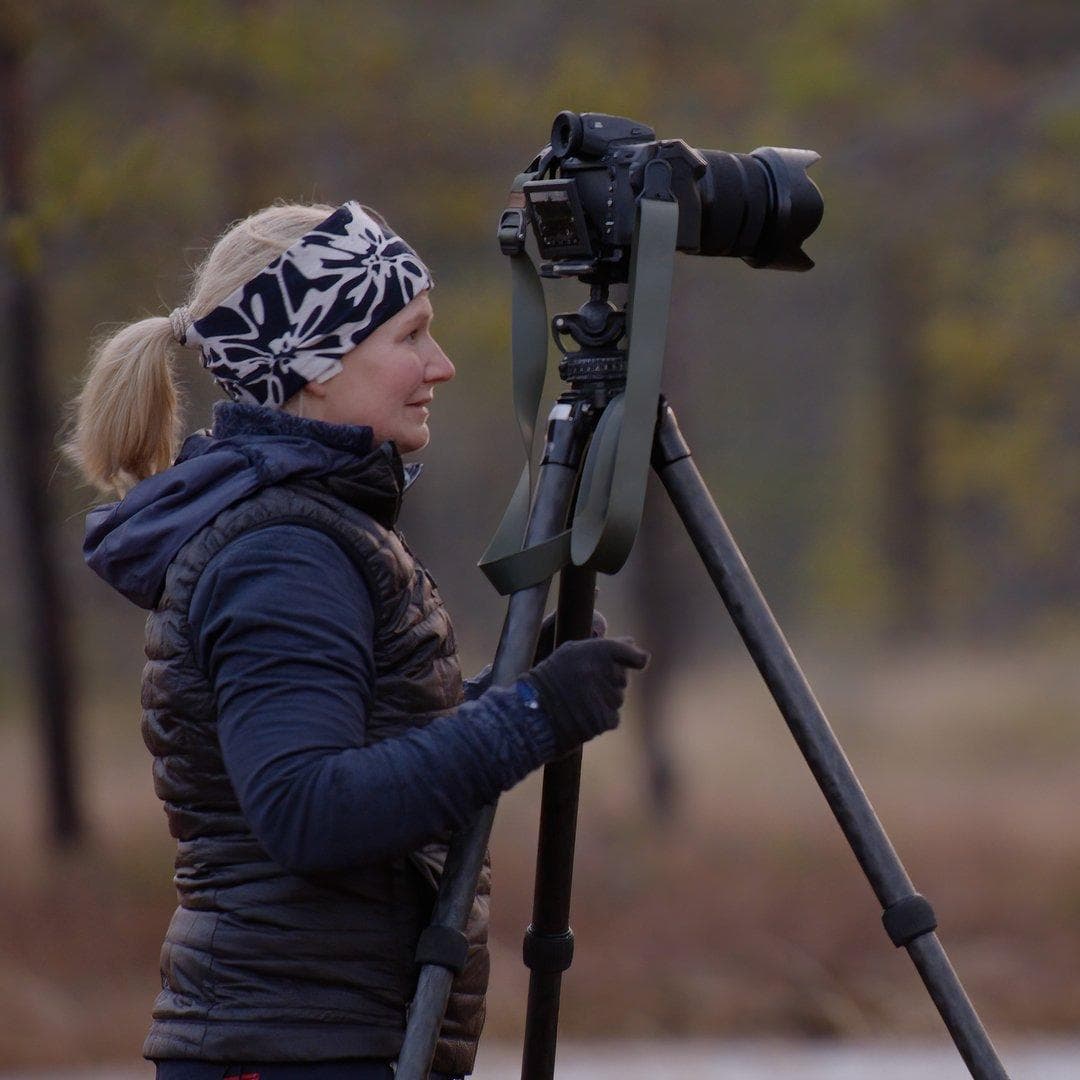
What makes Mana Pools special is the opportunity to photograph on foot. Professional guides position you at eye level with the animals — a perspective that creates dramatically stronger images than the usual "top-down" angle from a safari vehicle. Move slowly, keep camera ready and trust your guide.
Golden hour at Zambezi
Mana Pools offers some of Africa's most spectacular sunrises and sunsets. The Zambezi River reflects the sky like a mirror, creating natural double images and dramatic silhouettes. Underexpose (−0.3 to −0.7 EV) for deeper sky colors.
Mana Pools is one of few African parks that allows walking safaris among big game. This unique opportunity gives you eye-level perspective and an intimacy with wildlife that cannot be achieved from a vehicle — this is what makes Mana Pools a dream destination for serious nature photographers.
Practical information
Vaccines and documents
- Malaria prophylaxis recommended — consult doctor 4–6 weeks before departure
- Valid passport with at least 6 months validity
- Visa (can be purchased on arrival or online)
- Book 10–18 months in advance — peak season spots are very limited
Currency
USD cash needed for tips and local purchases (cards rarely accepted in the park).
Accommodation
Exclusive tented lodges on Zambezi banks with direct access to pools. Small groups (max 6 people) provide optimal conditions for photography.
Why Mana Pools for nature photographers?
- Walking safaris — Photograph big game on foot at eye level, a unique experience
- Standing elephants — A behavior that exists only in Mana Pools
- Wild dogs — One of Africa's best places to photograph this endangered species
- Zambezi reflections — Spectacular mirror images in golden light
- UNESCO World Heritage — Strictly limited visitor numbers provide exclusive photo opportunities