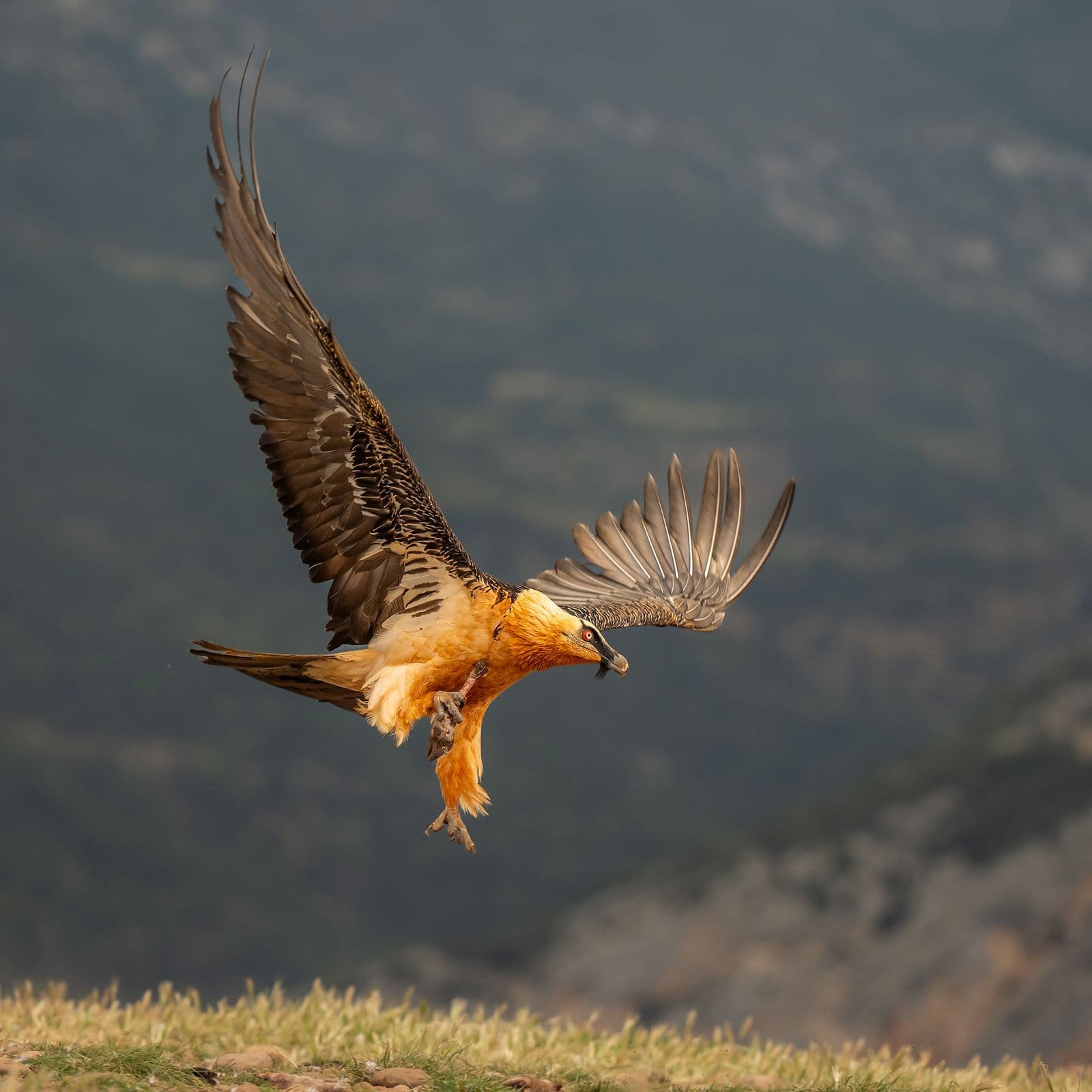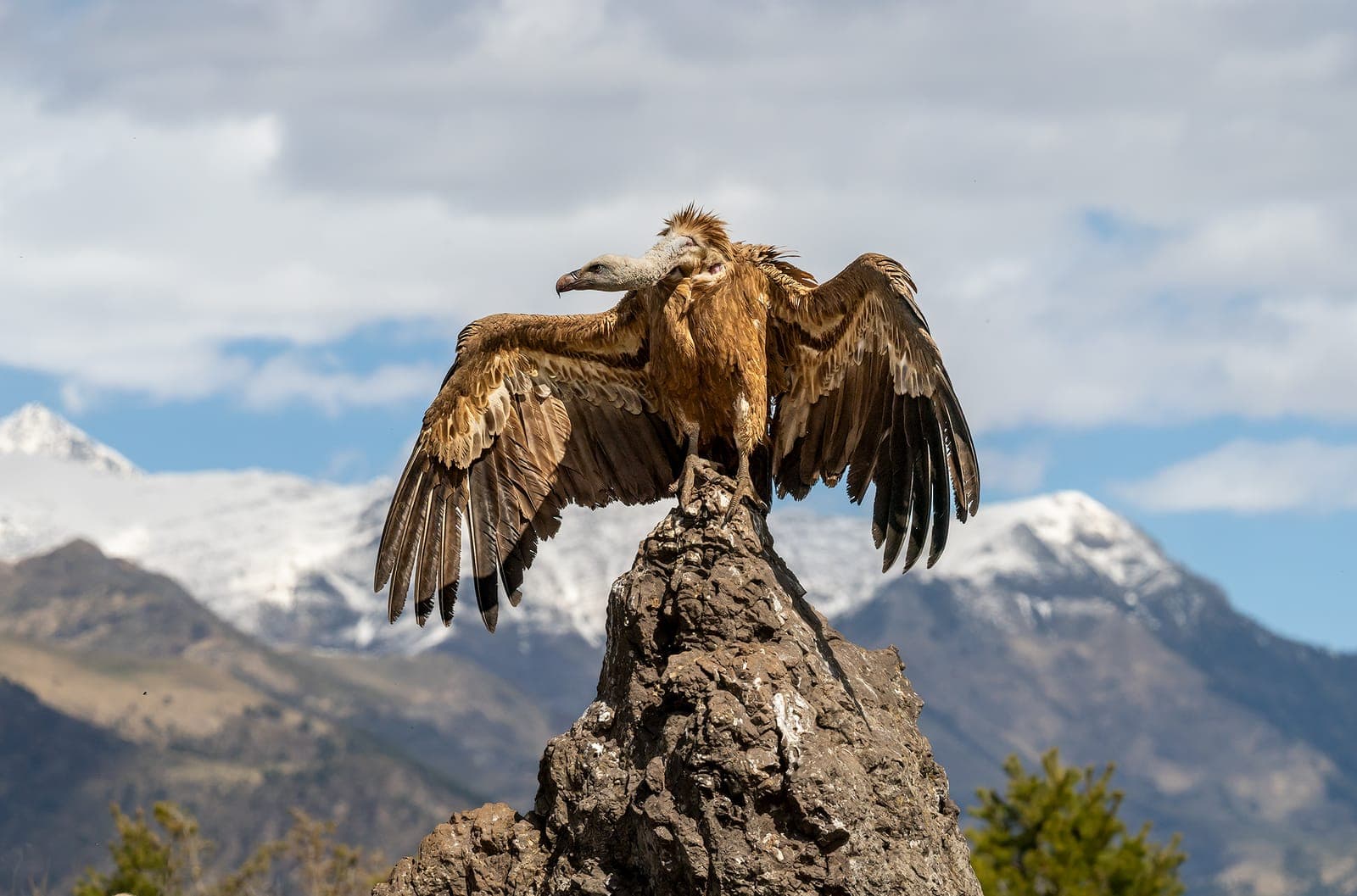
Spain is Europe's most important country for birds of prey — and for wildlife photographers wanting to document them. The country hosts over 90% of Europe's vulture population, the endangered Spanish Imperial Eagle, and the extremely rare Iberian lynx, the world's most endangered cat species. From Extremadura's oak groves to Andalusia's mountain ranges, there's a network of professional photography hides providing access to species that are nearly impossible to photograph elsewhere.
The Spanish landscape — dehesas (oak groves), mountain passes, and Mediterranean scrubland — also provides spectacular backgrounds. The intense Spanish light can be challenging, but during the golden hours it creates dramatic lighting that elevates every bird of prey image to a new level.
Area
505 000 km²
Griffon vultures
30 000+ par
Iberian lynx
~2 300
Best season
Feb–Maj
Vultures — Europe's Great Scavengers
Spain is the epicenter of Europe's vulture population. Four vulture species breed here: Griffon Vulture (Gyps fulvus), Black Vulture (Aegypius monachus), Bearded Vulture (Gypaetus barbatus), and Egyptian Vulture (Neophron percnopterus). From professional hides at feeding stations, you can photograph these impressive birds — with wingspans up to nearly three meters — at extremely close range.
The most dramatic images occur at the feeding stations, where dozens of vultures gather and interact. Dominance battles, landings with outstretched wings, and close studies of their expressive faces yield images with strong character. The Black Vulture, Europe's largest bird of prey, is particularly sought after — dark brown and majestic with a wingspan up to 2.9 meters.
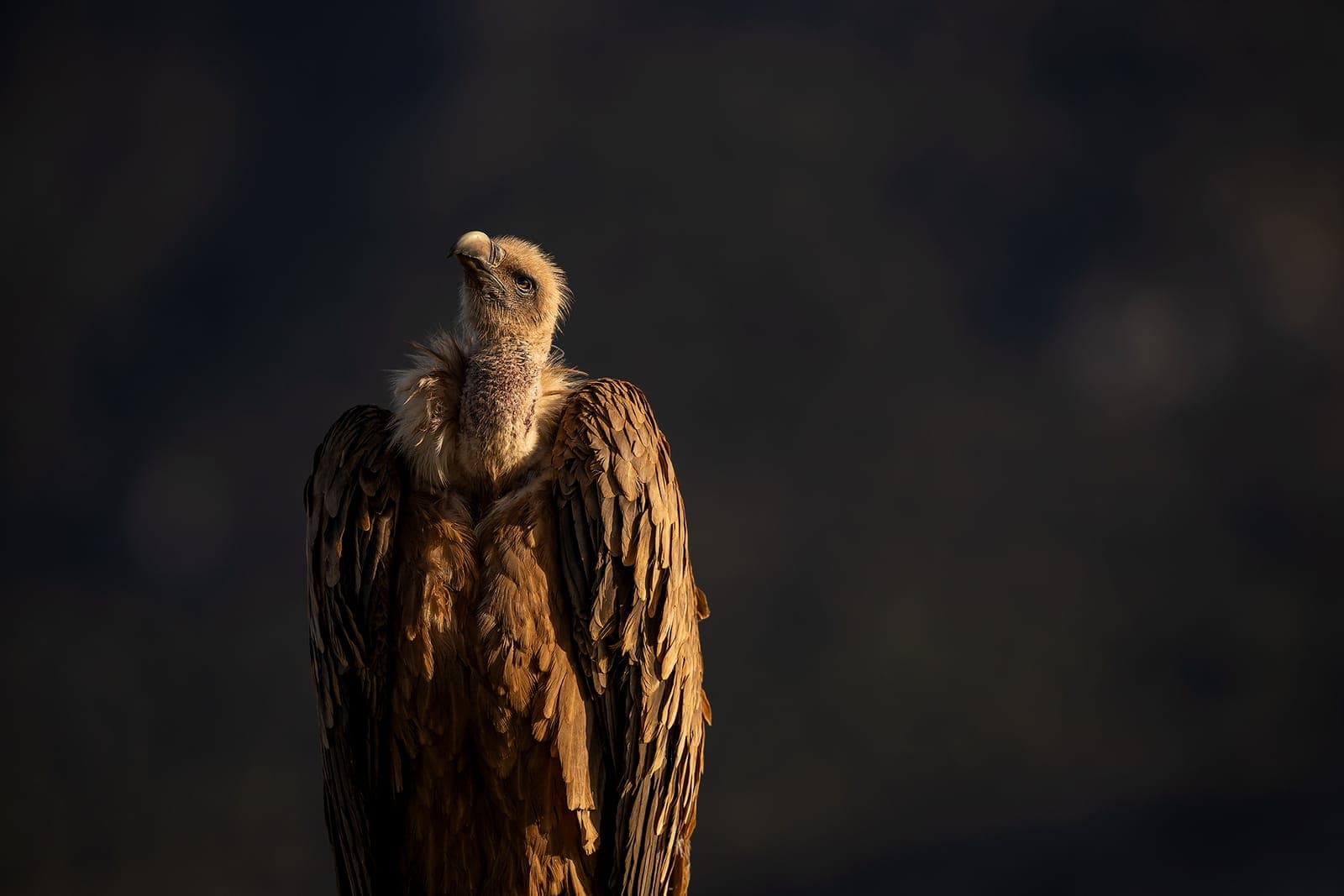
Griffon Vulture (Gyps fulvus)
Europe's most common vulture species with over 30,000 breeding pairs in Spain. From hides at feeding stations, you can photograph them at 5–15 meter distance. Their dramatic landings — with outstretched wings and feet forward — create powerful action shots. Facial portraits reveal an unexpectedly expressive bird with an intense gaze.
Bird of Prey Photography at Feeding Station
Use 200–500mm to vary between close-ups and environmental shots. Shutter speed 1/2000s or faster for landing sequences. Underexpose 0.3–0.7 EV in strong Spanish light to preserve details in white feathers. Prepare several compositions in advance — everything happens quickly at feeding stations. Continuous burst mode during landings captures the perfect wingbeat.
Iberian Lynx — World's Rarest Cat
The Iberian Lynx (Lynx pardinus) was near extinction with only 94 individuals in 2002. Thanks to one of the world's most successful conservation projects, the population has recovered to approximately 2,300 animals, mainly in Andalusia and Extremadura. Photographing this magnificent cat species in the wild is one of wildlife photography's great challenges — and great privileges.
The best opportunities are in Sierra de Andújar and the Doñana region, where specialized guides can locate lynx based on their routines and territories. The best time is January–March (mating season) and early morning/late afternoon. The lynx is elusive but not extremely shy — with the right guide and positioning, you can photograph them at 30–100 meter distance.
Spanish Imperial Eagle
The Spanish Imperial Eagle (Aquila adalberti) is one of the world's most endangered birds of prey with approximately 800 breeding pairs, almost all in Spain. It differs from the Eastern Imperial Eagle through its white "shoulder patches" and darker plumage. Extremadura's dehesas (oak groves) are the best region for photographing this majestic bird.
From hides at strategically placed perches and water holes, you can photograph Imperial Eagles landing, drinking, and interacting. Courtship flights in February–March, with spectacular loops and synchronized dives, are among Europe's most dramatic birdwatching experiences.
| Months | Season | Description | Rating |
|---|---|---|---|
| Feb–Mar | Early spring | Lynx mating. Imperial Eagle displays. Bearded Vultures nesting. Pleasant temperatures. | |
| Apr–May | Spring | Egyptian Vultures arrive. Bee-eaters nesting. Green dehesa with wildflowers. | |
| Jun | Early summer | Young in nests. Vultures active. Getting warm — photograph morning and evening. | |
| Jul–Sep | Summer | Extreme heat (40°C+) limits activity. Early morning may yield images. | |
| Oct–Jan | Autumn/winter | Vultures at feeding stations. Cranes in Extremadura. Lynx season begins in Dec. |
Equipment for Spain
Camera Body
Full-frame camera with good dynamic range — the harsh Spanish light requires cameras that handle contrast well. High ISO performance needed for early mornings in hides.
Lenses
- 200–600mm telephoto lens — for vultures and birds of prey from hides
- 150–600mm superzoom — flexible for lynx photography at varying distances
- 70–200mm f/2.8 — for environmental shots, dehesa landscapes with birds in context
Accessories
- Sun protection and ventilation for long hours in hides (40°C in June)
- Camouflage netting for lynx photography from vehicle
- Circular polarizing filter (reduces haze in strong light)
Why Spain?
- Europe's vulture capital — Four vulture species, often dozens at the same feeding station, at close range
- Iberian lynx — World's rarest cat species, possible to photograph with specialized guide
- Spanish Imperial Eagle — One of the world's most endangered birds of prey, breeds almost exclusively here
- Professional hides — Hundreds of specially built photography hides with thoughtful lighting and backgrounds
- Climate and light — Guaranteed sunshine, dramatic light, and pleasant temperatures during spring season