
The Varanger Peninsula in Finnmark, Northern Norway, is Europe's northernmost mainland coast and one of the continent's most underrated destinations for bird photography. Here, at 70° north, the Norwegian coast meets the Barents Sea — creating a unique combination of arctic climate, exceptional birdlife and winter light that is unparalleled.
What makes Varanger special for the nature photographer is the arctic light. During winter months, the sun stays extremely low on the horizon — or just below it — creating a blue hour and golden hour that lasts for hours instead of minutes. Sea eagles diving in this dream light, kingfishers resting on icy branches in pink shimmer, and Steller's eiders swimming in the crystal-clear waters of Varanger Fjord — all in lighting that no studio can replicate.
Latitude
70° N
Sea eagle pairs
100+
Winter species
30+
Best season
Nov–Mar
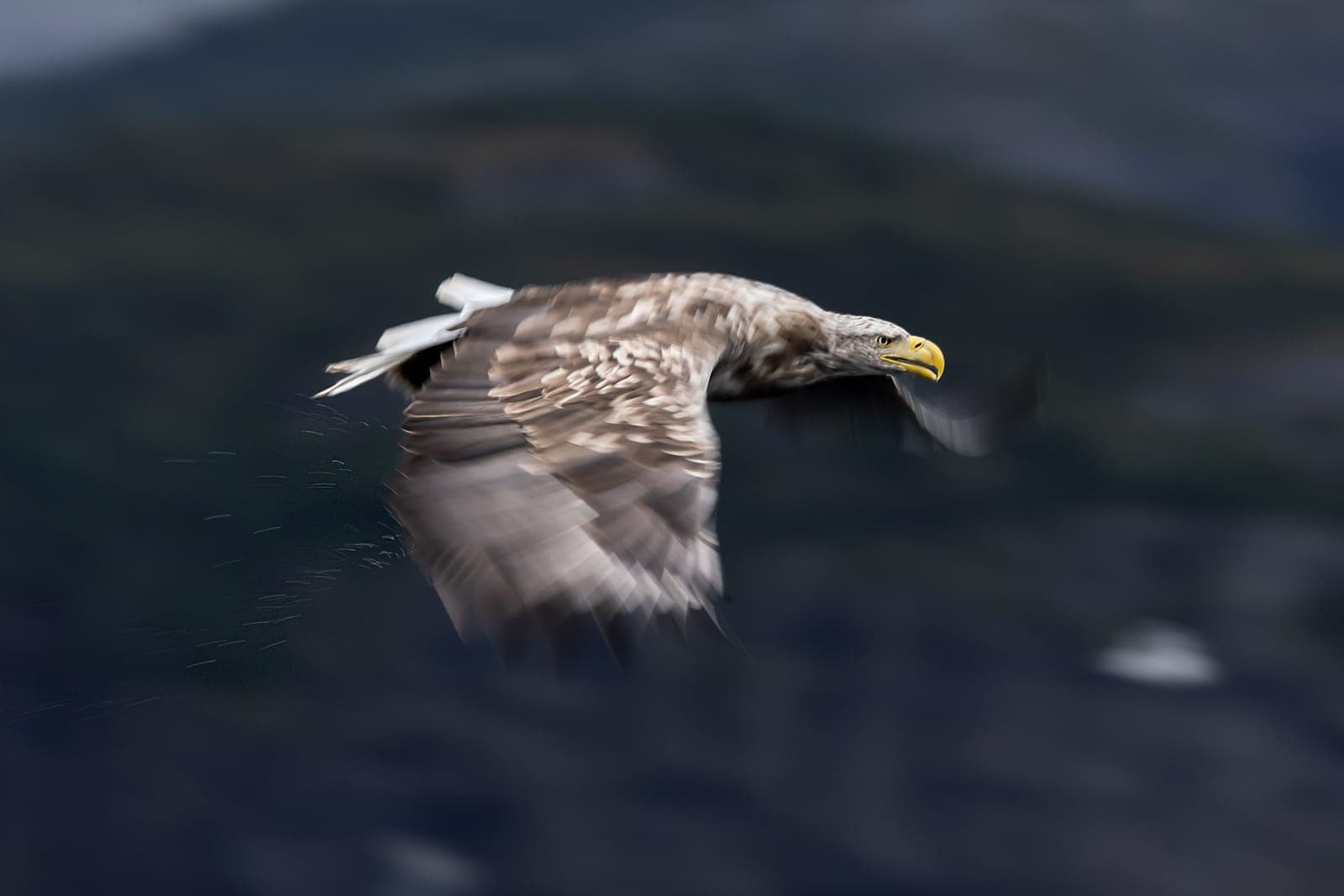
White-tailed Eagle (Haliaeetus albicilla)
Europe's largest bird of prey with a wingspan of up to 2.5 meters. In Varanger, over 100 pairs of sea eagles nest, and during winter additional birds gather around the ice-free parts of the fjord. From specially adapted hides and vehicles you can photograph the eagles at close range — often under 15 meters distance — as they land on bait fish against a backdrop of snow-covered mountains and arctic light. Dramatic action shots with outstretched talons in blue-pink winter light are Varanger's signature image.
Bird photography in arctic winter light
Varanger's extremely low sun provides unique light but requires adaptation. White birds against snow fool the light meter — overexpose +1 to +1.7 EV. Use manual exposure and check the histogram regularly. Shutter speed at least 1/2000 s for eagles in flight, 1/500 s for perched birds. The temperature (down to -25°C) drains batteries quickly: have 3–4 fully charged spare batteries in a pocket close to your body and rotate them. Use the camera's EVF instead of LCD to save power. Avoid breathing on the viewfinder — condensation freezes instantly.
Kingfisher — Europe's Northernmost
Varanger is home to the northernmost population of kingfishers (Alcedo atthis) in Europe — a species normally associated with temperate climates further south. The kingfishers in Varanger have adapted to subarctic conditions and survive winter thanks to the ice-free parts of the Pasvik River and the coast's geothermal springs.
Photographing kingfishers in an arctic environment — perched on an icy branch with snow-covered wilderness in the background — produces images that are completely unique. The low winter light creates a soft, blue-pink shimmer that highlights the metallic blue and orange plumage. Hides are positioned at known fishing spots with thoughtful backgrounds and optimal light angles.
Steller's Eider — Arctic's Diving Duck
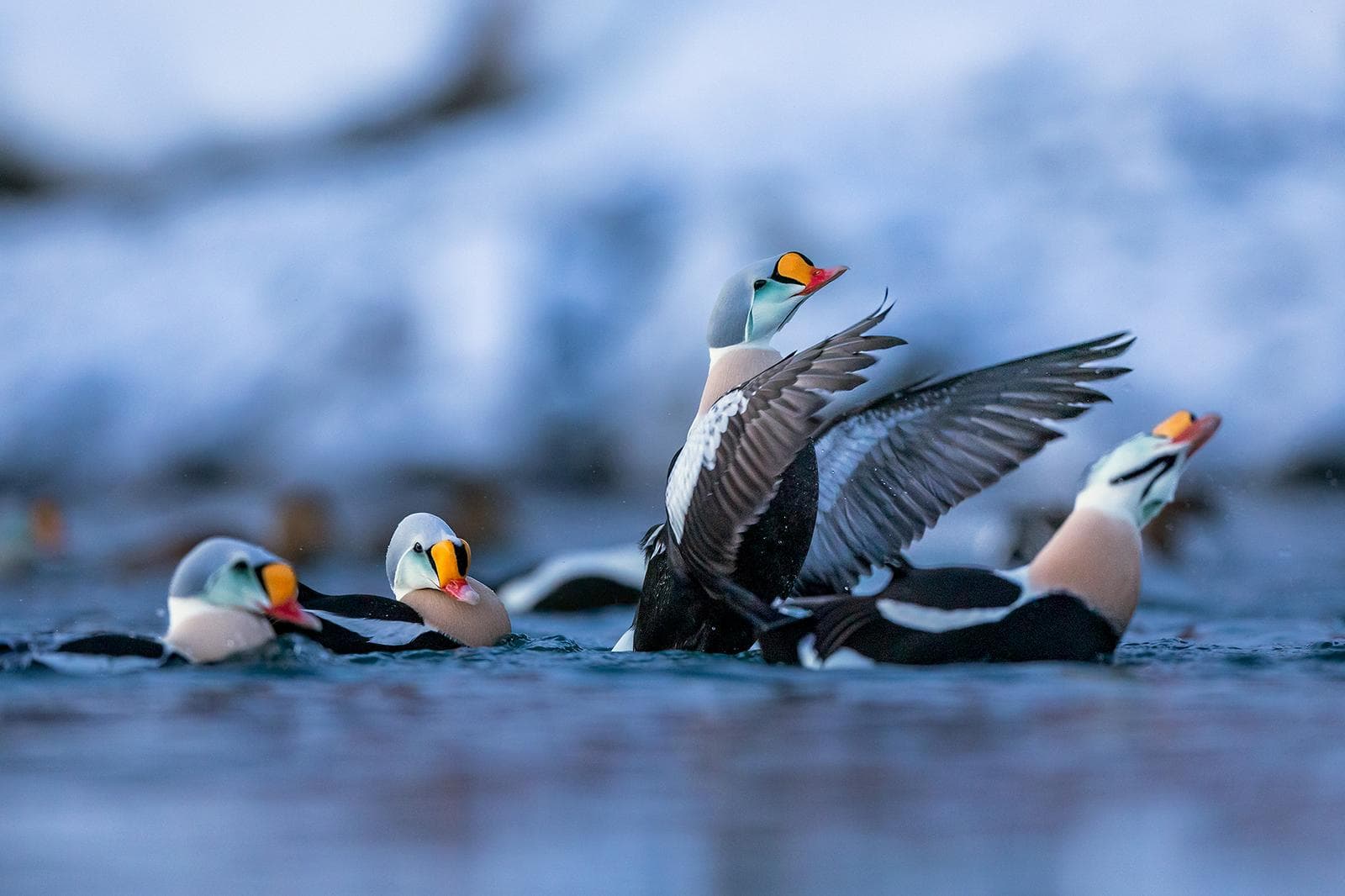
Steller's eider (Polysticta stelleri) is one of Europe's most sought-after species among bird photographers, and Varanger Fjord is the best place in the world to photograph it. This beautiful diving duck with its intricate plumage pattern in black, white, rust-brown and green overwinters in the fjord in flocks of hundreds of individuals.
The best photography opportunities occur when Steller's eiders gather near the harbors of Vardø and Båtsfjord to feed. From car hides or harbor hides you can photograph them at 10–30 meters distance. Males' plumage is at its most beautiful in January–March. Combine with king eiders and long-tailed ducks often seen in the same flocks for variety in your image series.
| Months | Season | Description | Rating |
|---|---|---|---|
| Nov–Dec | Polar night | Blue hour at midday. Steller's eiders arrive. Sea eagles active. Northern lights. | |
| Jan–Feb | High season | Best light (low sun, golden hours). Steller's eiders in breeding plumage. Sea eagles. Kingfishers. | |
| Mar | Late winter | Longer days, stronger light. Courtship displays begin. Snowy owls occasionally. | |
| Apr–Oct | Summer | Breeding seabirds. Midnight sun. Steller's eiders gone. Less interesting for photography. |
Equipment for Varanger
Camera Bodies
Full-frame with excellent high-ISO performance (ISO 3200–12800) — the arctic winter light is beautiful but dim. Weather sealing is critical: snow squalls, sea spray and extreme cold (-15 to -25°C) are hard on equipment. Always have two camera bodies ready — one with long telephoto, one with shorter zoom.
Lenses
- 500–600 mm f/4 — main lens for sea eagles and Steller's eiders
- 300 mm f/2.8 — for kingfishers in low light, with or without 1.4x teleconverter
- 70–200 mm f/2.8 — for environmental shots and larger bird flocks
- 1.4x teleconverter — for extra reach without sacrificing too much light-gathering power
Cold Protection
- 4–5 spare batteries (cold halves battery life — rotate them from body pocket to camera)
- Neoprene lens hood against condensation
- Thin inner gloves + thicker outer gloves with removable fingers
- Chemical hand warmers in camera pocket
- Avoid bringing cold equipment into warm rooms without first placing it in a sealed plastic bag (condensation)
Why Varanger?
- World's best arctic bird photography — Sea eagles, Steller's eiders and kingfishers in light that exists nowhere else
- Unique arctic light — The extremely low winter light creates golden and blue-pink tones that last for hours, not minutes
- Steller's eiders — The only place in the world where this sought-after species can be photographed reliably and at close range
- Kingfishers in arctic environment — Europe's northernmost population provides images that are completely unique of their kind
- Accessibility — Direct flights Oslo–Vardø/Båtsfjord, good roads, organized photo tours with local guides who know the best locations