
In planning · Jul–Aug 2027
Jaguars in the Pantanal
- Free of charge
- No commitment
- Priority information
Planning overview
- Status
- In planning
- Preliminary period
- Jul–Aug 2027
- Dates to be confirmed
- Photo focus
- Expedition
- Format
- Small group
- The photographer at the centre
A trip that gives more than photos
Why this trip
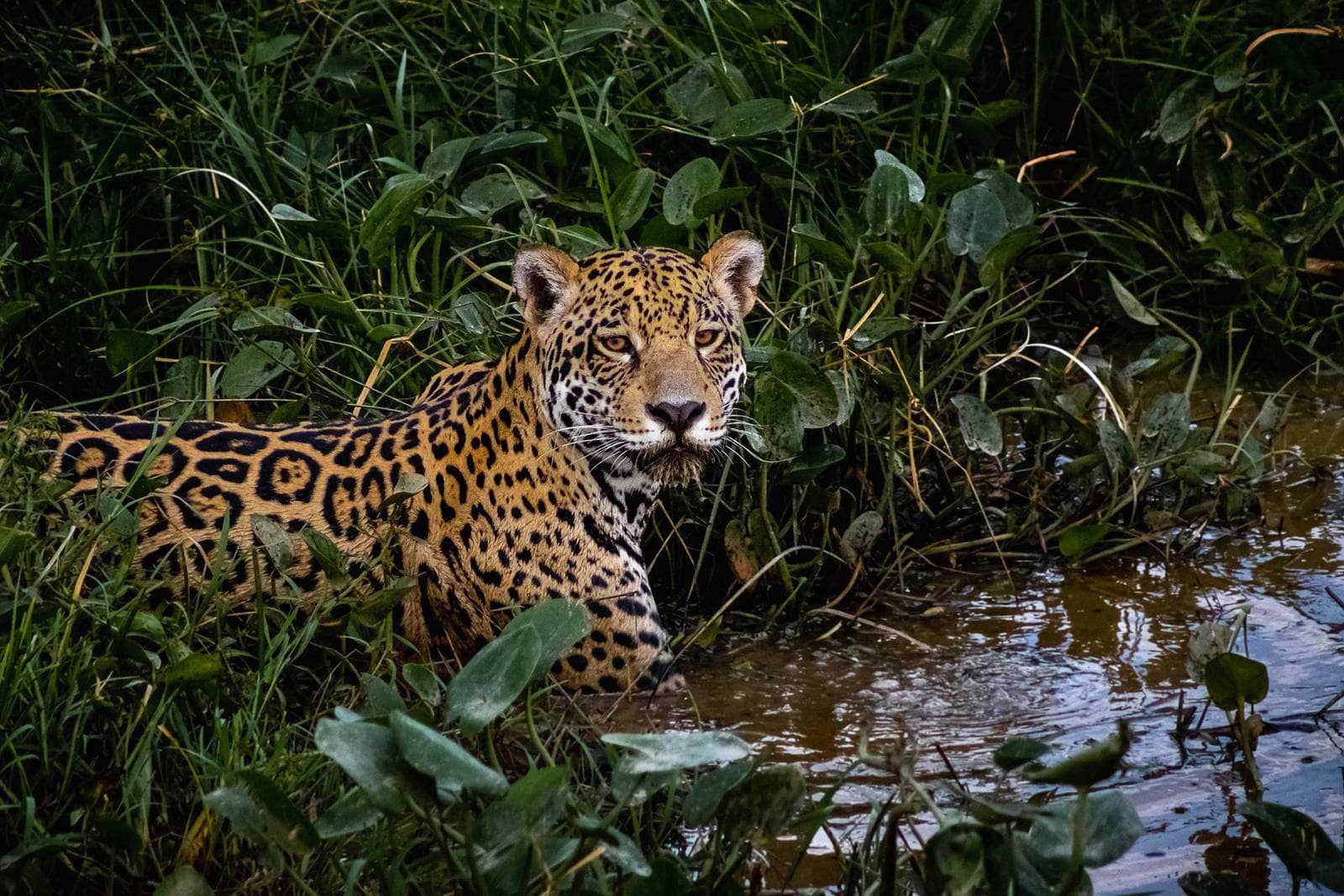
Travel deep into the Pantanal with Focus RAW – to Porto Jofre and one of the most jaguar-dense regions on Earth. Here, we will spend at least six intensive days on the rivers with one clear objective: to photograph jaguars.
Brutus first visited the Pantanal more than fifteen years ago. At that time, the region was known primarily for its extraordinary birdlife, while jaguar ecotourism was still in its infancy. Much has changed since then. Knowledge of the jaguars’ territories and behaviour has grown, the infrastructure has developed, and Porto Jofre has emerged as perhaps the finest place in the world to encounter and photograph wild jaguars.
Unlike many of Africa’s large cats, jaguars are regularly active during daylight hours. They patrol the riverbanks, swim between islands, rest in the open beside the water and hunt caimans along the shoreline. This creates the possibility not only of brief sightings at dawn or dusk, but of extended encounters, visible behaviour and genuine action while there is still usable light to work with.
In good conditions, it is not unusual to encounter five or more individual jaguars in a single day.
But a truly exceptional photography tour is not created by adding as many destinations and species as possible to an itinerary. It is created by making the right choices – and by being prepared to leave certain things out.
In July 2026, we travelled through the Pantanal ourselves to inspect and verify the locations, lodges and photographic opportunities we had identified during our research. Many places can sound ideal on paper: feeding stations attracting large numbers of birds, waterholes regularly visited by tapirs, or lodges offering opportunities to see giant anteaters and other iconic species.
Only when you stand there yourself – studying the setting, the light, the backgrounds, the shooting angles and the way the experience is actually managed – can you determine whether it meets the standard required for a serious photography tour.
Some locations therefore did not make the final itinerary.
At one lodge, the birdlife around an organised feeding area was abundant, but the environment felt more like a zoological display than the authentic wildlife photography experience we want to offer. Tapirs did visit a waterhole, but the design of the location, the backgrounds and the available photographic angles were not strong enough.
The presence of an animal does not automatically create the conditions for a compelling image.
Another lodge offered the best accommodation and food of our scouting journey, along with reliable opportunities to see and photograph giant anteaters. Yet the experience took place on a large working cattle ranch, where guests drive between fenced paddocks and grazing areas in search of wildlife.
For someone whose priority is simply to see a giant anteater, it can be a worthwhile stop. For us, however, the experience felt too far removed from the sense of wilderness that should define a dedicated wildlife photography journey. It may still work as a final night before flying home, but only with complete transparency: you are photographing giant anteaters on a ranch, not in an untouched wilderness.
These decisions are fundamental to the way we design our tours.
Comfort and food matter, but they can never compensate for a photographic experience that falls below the required standard. We would rather remove a comfortable lodge from the programme than compromise on the environment, the light, the backgrounds or the possibility of creating images that feel authentic.
This is also why we do not fill the itinerary with additional excursions and transit days simply to make the journey appear broader on paper. We place the time where it delivers the greatest photographic value.
At least six days in Porto Jofre means more hours on the rivers, more opportunities to follow individual jaguars over time and a greater chance of remaining with an encounter as it develops – from a quiet portrait into swimming, hunting or dramatic interaction.
The Pantanal is also one of the most biodiverse wetlands on the planet. More than 400 bird species breed here, and birdlife is constantly present around us: kingfishers along the riverbanks, raptors above the forest canopy and colourful species appearing around almost every bend.
You will photograph a remarkable variety of birds during this journey simply because they are everywhere.
But we are not attempting to do everything on a single tour. The birdlife of the Pantanal is so rich that it deserves a dedicated photographic journey of its own, built around the right species, locations, light and seasonal conditions.
This tour has a different focus.
We will, of course, photograph far more than jaguars. Caimans are present in extraordinary numbers along the rivers and sandbanks – so many that by the end of the week, you may not even raise your camera unless the light, angle or behaviour is exceptional.
Capybaras move along the water’s edge. Giant otters hunt, play and communicate in family groups. Around every bend in the river, another photographic opportunity may be waiting.
But our purpose is clear.
We travel to the Pantanal for the jaguar.
For the encounters. The hunts. The swims. The behaviour. And for those unpredictable moments when South America’s most powerful predator suddenly emerges from the forest and steps into the light.
That is why we created this journey.
The place
Where we'll be
Priority list · Jaguars in the Pantanal
Follow the trip as it takes shape
Register your interest and we will contact you as the plans become more concrete. It is completely non-binding.
- Advance notice before the public launch
- The chance to book before general release
- Provisional programme, pricing and practical info
Join the priority list
We will notify you when the trip launches.
No commitment · No payment · Decide in your own time
Thoughtful programme
Planned around the best possible photo opportunities.
Experienced guides
Knowledge, reassurance and focus in the field.
Photography first
No compromise between the experience and the images.
Small groups
More time, more presence, a better rhythm.
How the priority list works
- 1
Register your interest
Reach out if the trip appeals to you — with no obligation at all.
- 2
Get advance notice
Dates, price and practical details reach you first.
- 3
Book before launch
If the trip feels right, you get to book before it goes public.