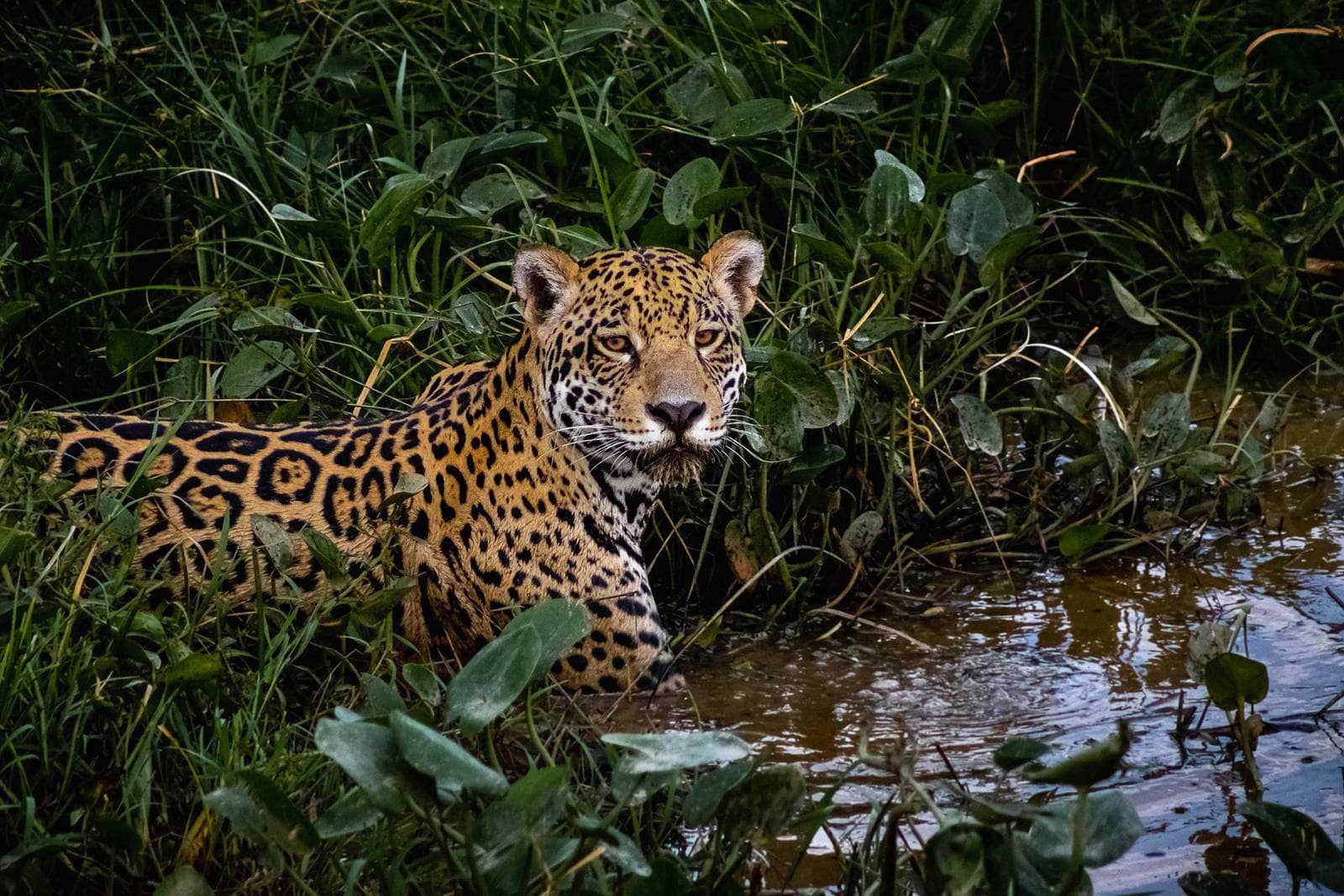
Pantanal in western Brazil is the world's largest tropical wetland — a UNESCO Biosphere Reserve spanning 150,000 km², larger than all of England. Unlike the dense rainforest of the Amazon, Pantanal's open landscape offers unbeatable visibility for nature photographers. It has the highest concentration of jaguars on Earth, and during the dry season, wildlife gathers around shrinking water points in unmatched density.
For nature photographers dreaming of capturing jaguars on camera, there is simply no better place.
Area
150 000 km²
Jaguars
10 000+
Bird species
650+
Best season
Jun–Okt
The Jaguar — Pantanal's Crown Jewel
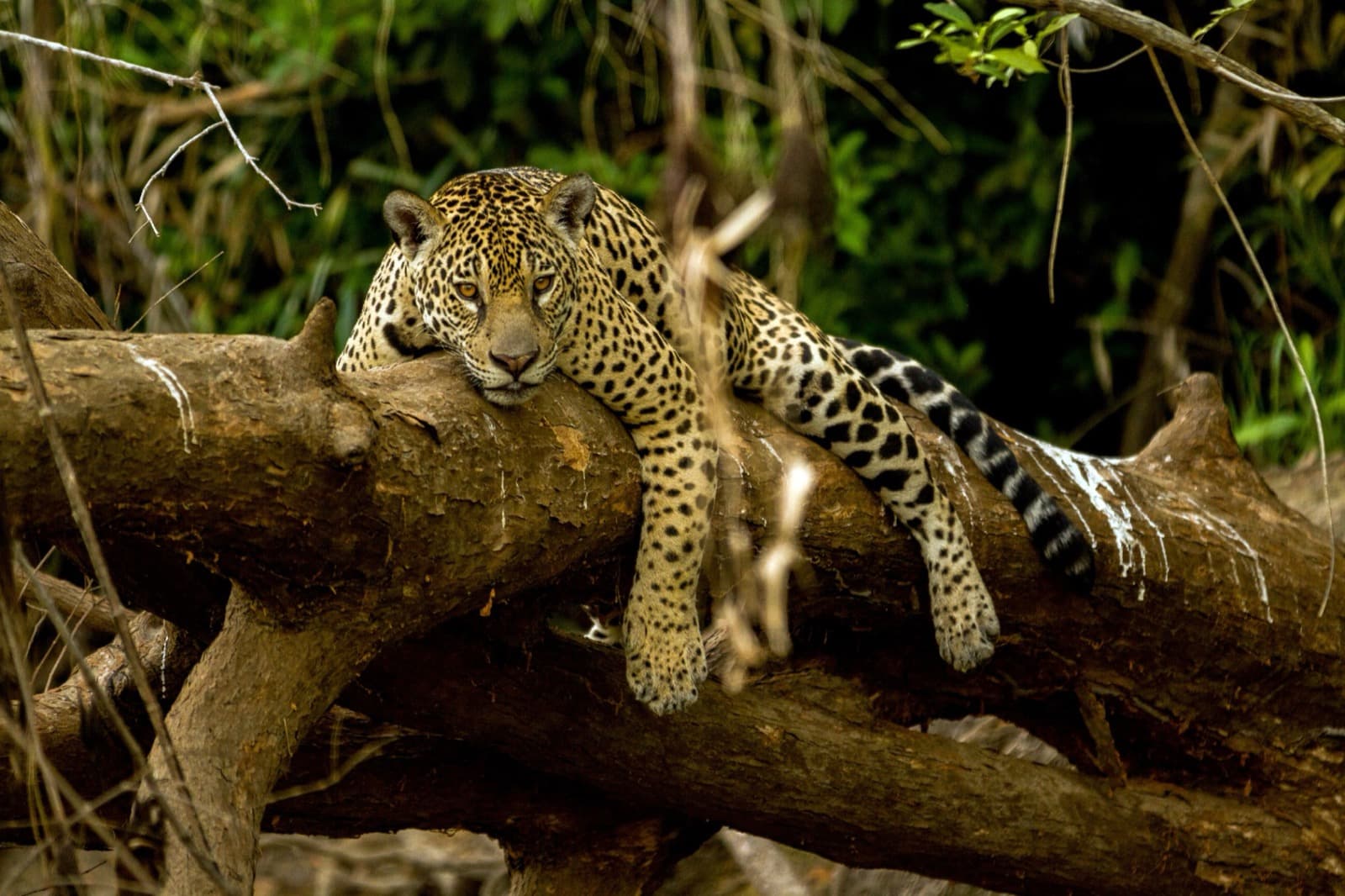
Pantanal hosts the world's densest jaguar population with over 10,000 individuals. What makes this place unique for photographers is that jaguars here regularly hunt in water — a behavior that is extremely rare elsewhere. From boats on the Paraguay River and its tributaries, you can photograph jaguars swimming, drinking, and hunting caimans at close range.
During peak season (July–September), observation chances reach 95–98% during a seven-day safari. Even during June and October, they remain at 85–92%.
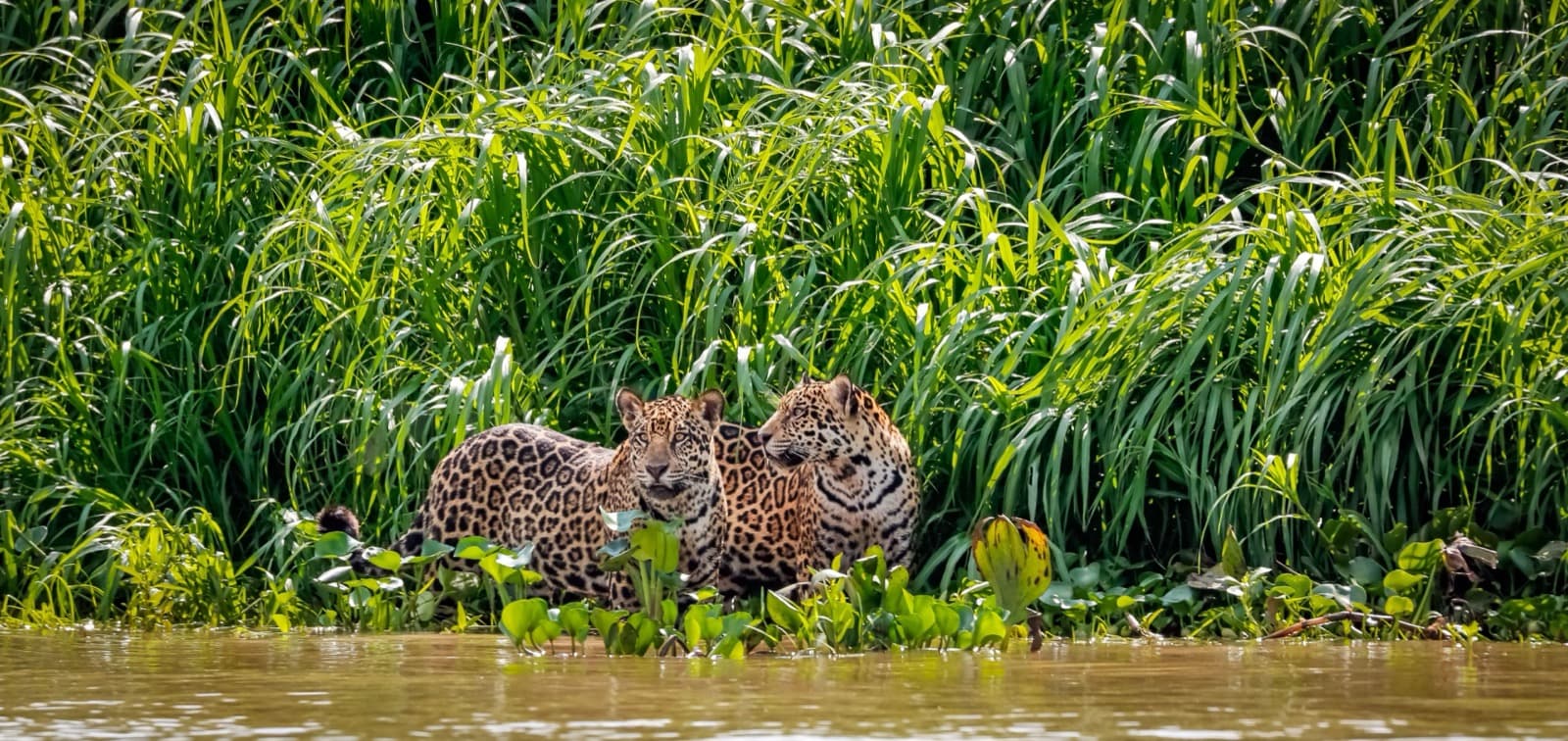
Jaguar (Panthera onca)
The Americas' largest cat and Pantanal's undisputed star. The jaguars here are accustomed to boats and can often be photographed at 15–30 meter distances. Their unique water hunting — diving for caimans from riverbanks — provides dramatic image sequences found nowhere else.
Jaguar Photography from Boat
Use 400–600mm telephoto lenses. Set continuous autofocus and 8–10 frames per second to capture hunting sequences. Best times: 06:00–10:00 and 15:00–18:00 when jaguars are most active. Maintain fast shutter speed (at least 1/1000 s) for swimming shots.
More Species to Photograph
Pantanal's biodiversity extends far beyond jaguars. Here you'll find some of the world's most photogenic species, all accessible during a single trip.
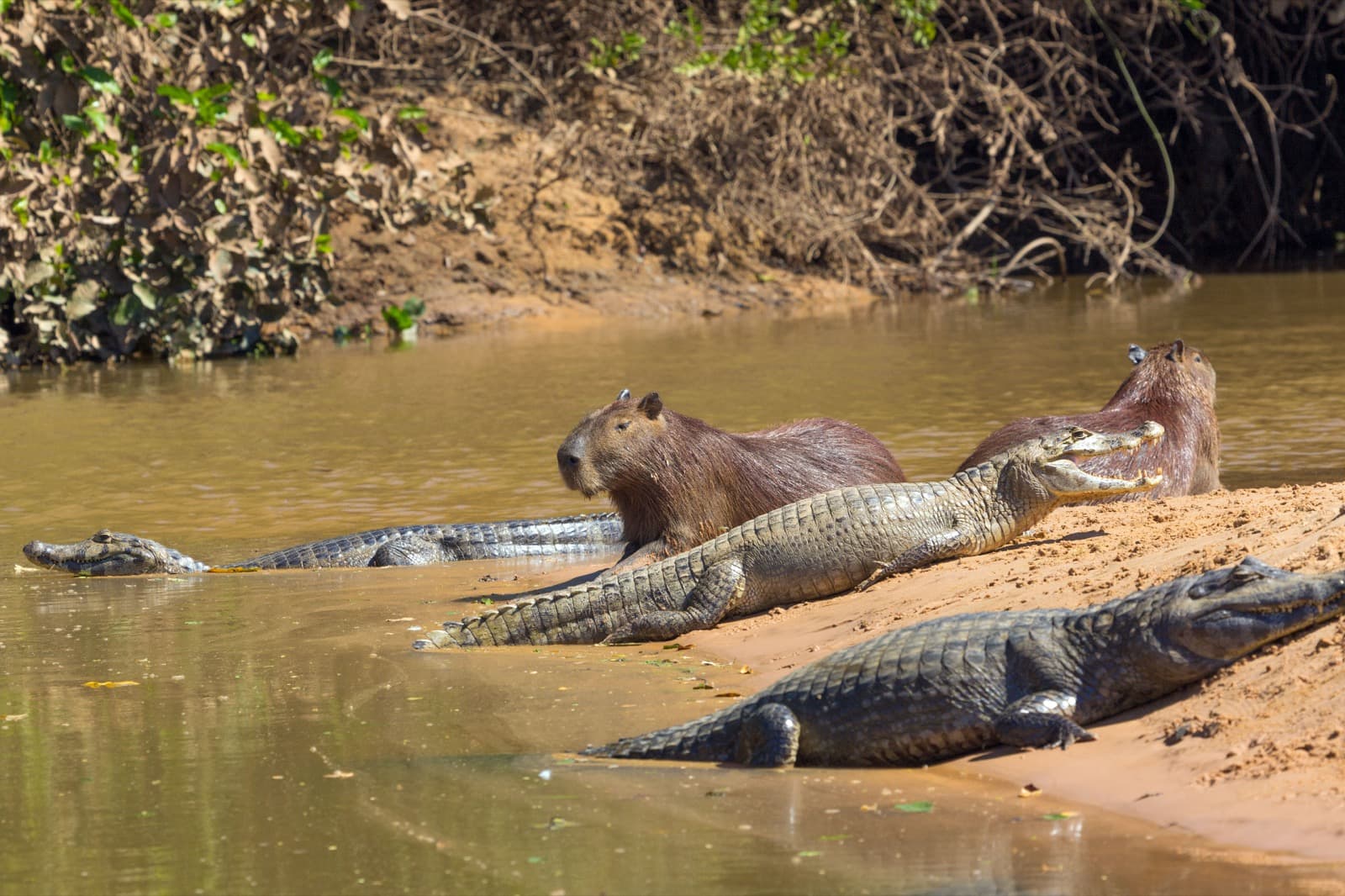
Yacaré Caiman
Yacaré caimans occur in enormous concentrations at drying water holes during the dry season. They are a primary prey for jaguars, creating dramatic predator-prey scenarios. Black caimans can reach over four meters and provide powerful portrait images.
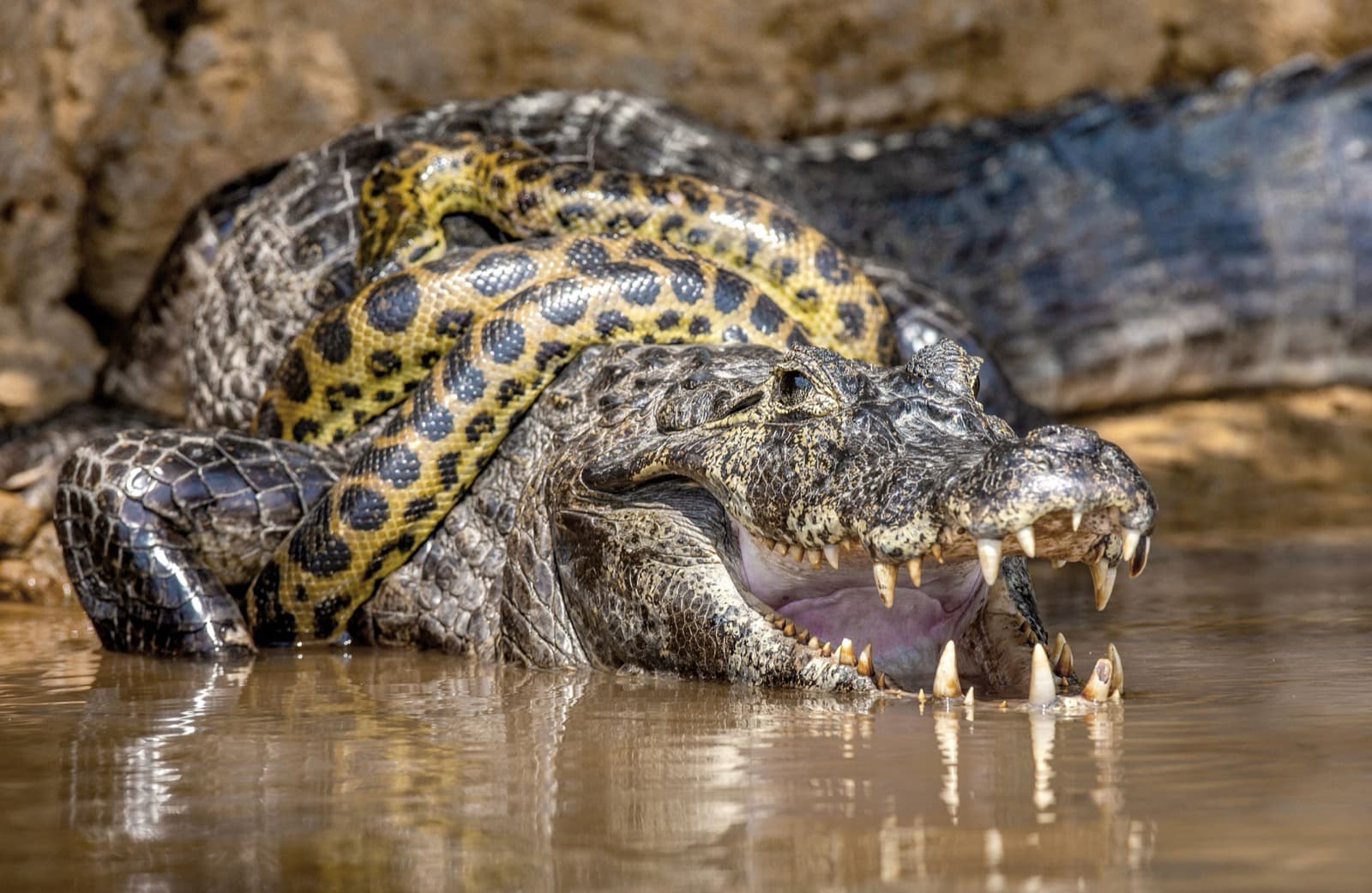
Yacaré Caiman
Hundreds of caimans gather at shrinking water bodies during the dry season. Combined with jaguar hunting, this creates unique predator-prey image sequences — one of Pantanal's most sought-after photographic subjects.
Capybara
The world's largest rodent (up to 65 kg) lives in large family groups along the rivers. Their calm temperament makes them ideal for behavioral and close-up photography. As the jaguar's primary prey, they also offer exciting interaction shots.
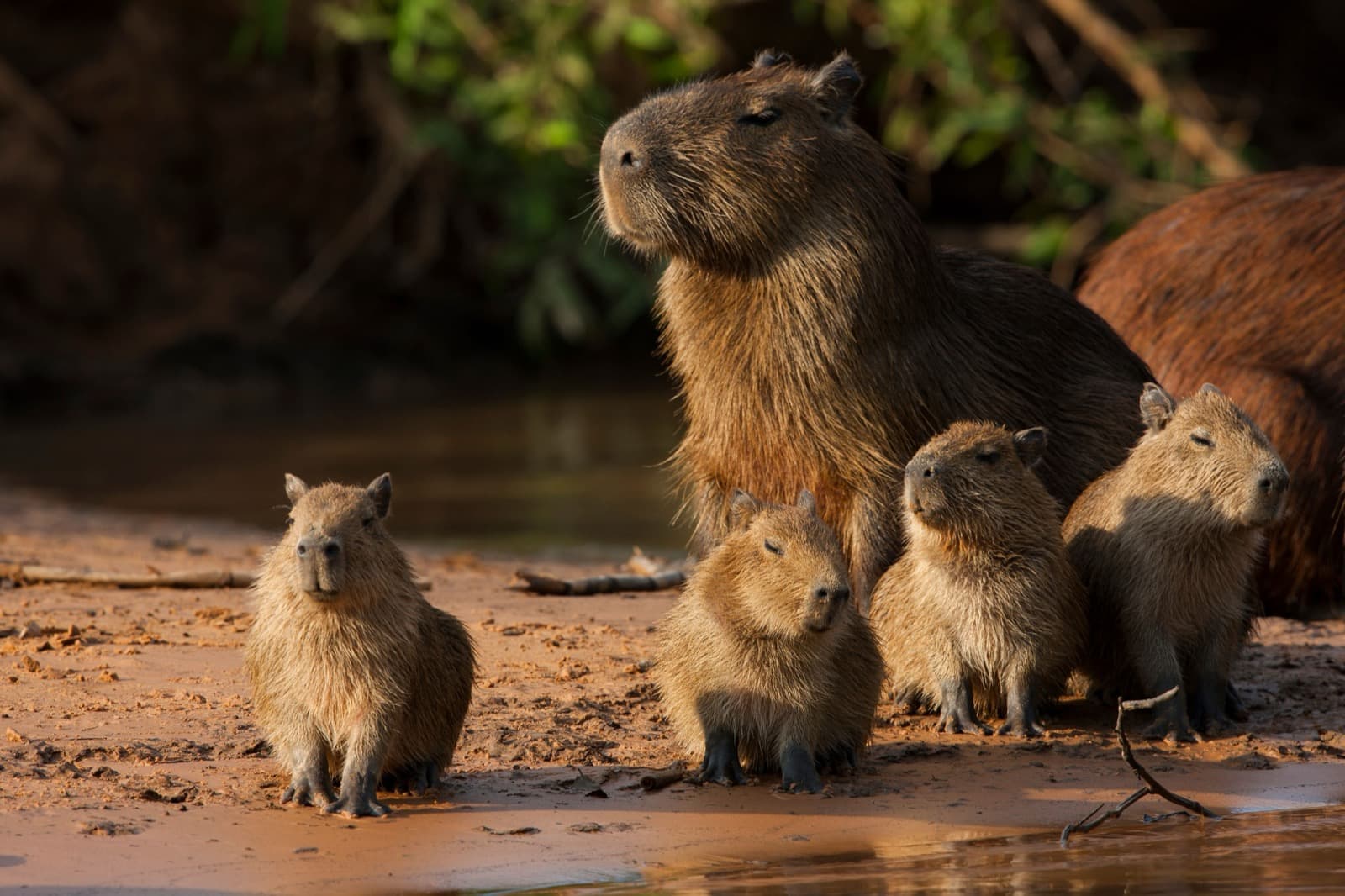
Capybara
Capybaras live in social groups of 10–20 individuals along riverbanks. They are easy to approach and offer excellent opportunities for behavioral photography — from nursing young to alert adults scanning the horizon for predators.
Giant Otter
South America's largest mustelid (up to 1.7 meters) lives in social family groups and is one of the continent's most endangered species. Their cooperative hunting behavior and playful family interactions provide fascinating photo stories.
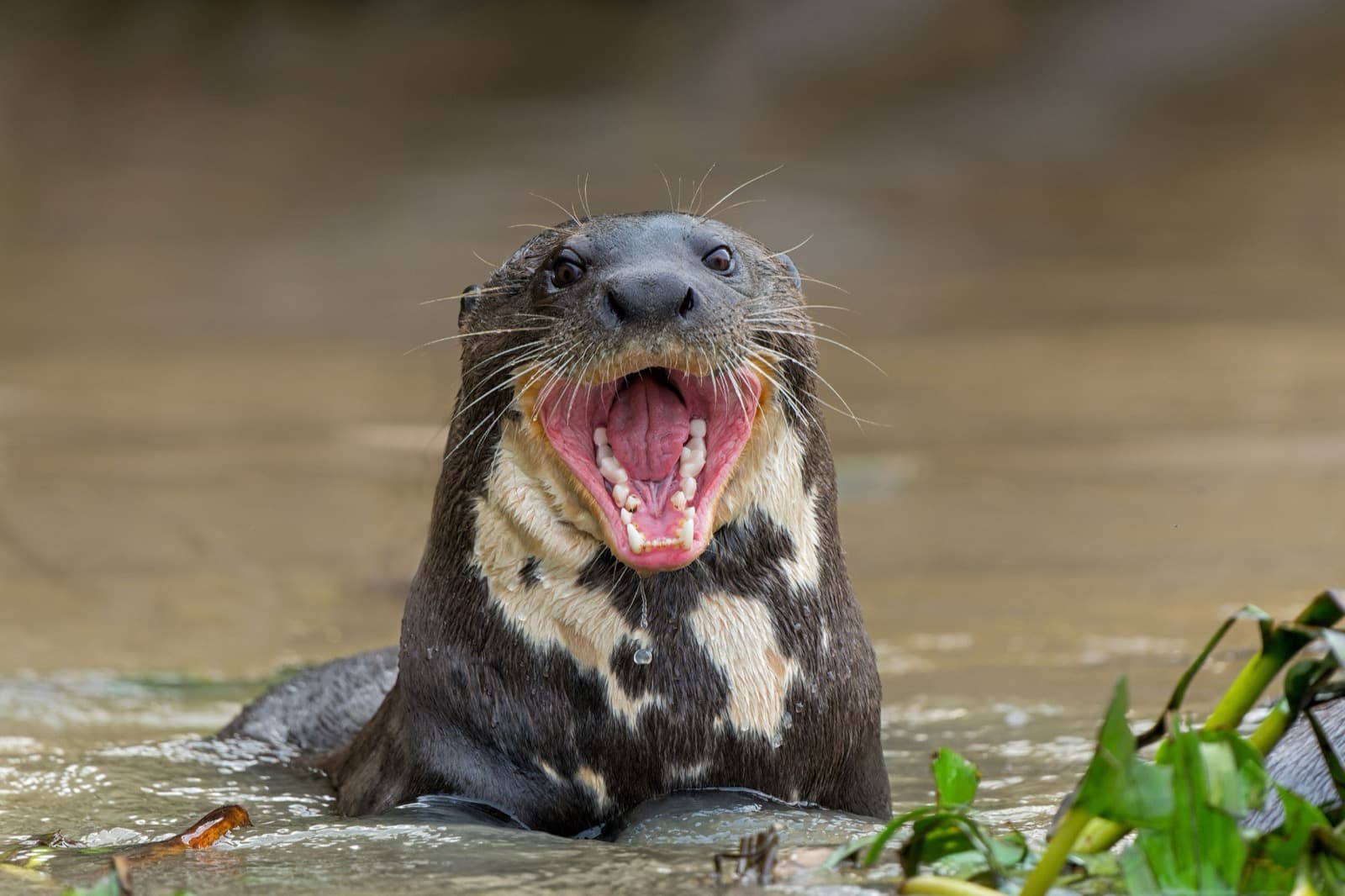
Giant Otter (Pteronura brasiliensis)
Giant otters hunt in coordinated groups and communicate with a rich repertoire of vocalizations. They are naturally curious and sometimes approach boats, providing intimate portrait opportunities that few other wild animals offer.
Birds — 650+ Species
Pantanal is paradise for bird photographers. Highlights include the hyacinth macaw (world's largest parrot), toucan, jabiru stork, hummingbirds, and fish eagles. During breeding season (October–March), birdlife explodes in color and activity.
Bird Photography in Wetlands
Polarizing filters reduce water reflections and provide richer colors. Underexpose slightly (−0.3 to −0.7 EV) for deeper sky colors. Silhouette shots at sunrise against mirror-calm water surfaces create strong compositions.
Best Season for Photography
The dry season (May–November) is the photographer's golden period. Animals concentrate around water points and visibility in the open landscape is optimal.
| Months | Season | Description | Rating |
|---|---|---|---|
| Jul–Sep | Peak Season | 95–98% chance of seeing jaguar. Clearest weather, maximum activity. | |
| Jun & Oct | Excellent Alternative | 85–92% jaguar chance. Significantly fewer tourists. 20–30% lower prices. | |
| May & Nov | Season Edge | 75–85% jaguar chance. Lowest prices. Some weather variation possible. | |
| Dec–Apr | Rainy Season | Flooding makes many areas inaccessible. Best for bird photography. |
Equipment for Pantanal
Camera Bodies
Weather-sealed full-frame cameras are essential in the wetland environment. Bring at least two camera bodies — one as backup and for quick lens changes. Fast autofocus is crucial for hunting sequences.
Lenses
- 400–600mm telephoto — absolutely necessary for jaguar photography from boats
- 70–200mm f/2.8 — for environmental shots and wider animal portraits
- 24–70mm — for landscapes and contextual wetland images
Accessories
- Waterproof lens covers (rain and spray from boats)
- Boat-mountable tripod solution or beanbag
- Extra memory cards and batteries (humid climate drains batteries)
Pantanal's humid tropical climate is harsh on electronics. Store cameras in airtight bags with desiccant when not photographing. Always have rain protection ready — sudden showers occur even during the dry season.
Photography Techniques in Pantanal
Jaguar Hunting from Boats
The best jaguar images are taken during golden hours — early morning (06:00–10:00) and late afternoon (15:00–18:00). River bends are hotspots where jaguars often hunt. Position yourself for multiple angles and be patient — a hunting sequence can unfold in seconds.
Golden Light Over Wetlands
Sunrise (05:30–07:30) and sunset (17:30–19:00) provide magical light. Reflections in mirror-calm water create dramatic double images. Underexpose slightly for deeper colors and use silhouettes against the colored sky.
Practical Information
Vaccines and Documents
- Yellow fever vaccination required — obtain certificate 4–6 weeks before departure
- Valid passport with at least 6 months validity
- Book 8–16 months in advance — places are limited
Currency
Brazilian real (BRL) and USD cash needed for tips and local purchases.
Accommodation
Lodges along the Paraguay River with direct access to jaguar territory. Small groups (max 4 people per boat) provide optimal conditions for photography.
Unlike the Amazon rainforest, Pantanal's open landscape offers clear sight lines in all directions. This makes the area unique for nature photography — you can follow an animal's movements without vegetation blocking your view.
Why Pantanal for Nature Photographers?
- Open landscape — Crystal clear visibility, unlike Amazon rainforest
- Water hunting — Jaguars hunt regularly in water, unique to Pantanal
- Concentration — Dry season's shrinking water gathers wildlife
- Accessibility — Boat-based photography allows close contact with animals
- Species diversity — Jaguars, caimans, capybaras, giant otters and 650+ bird species on the same trip