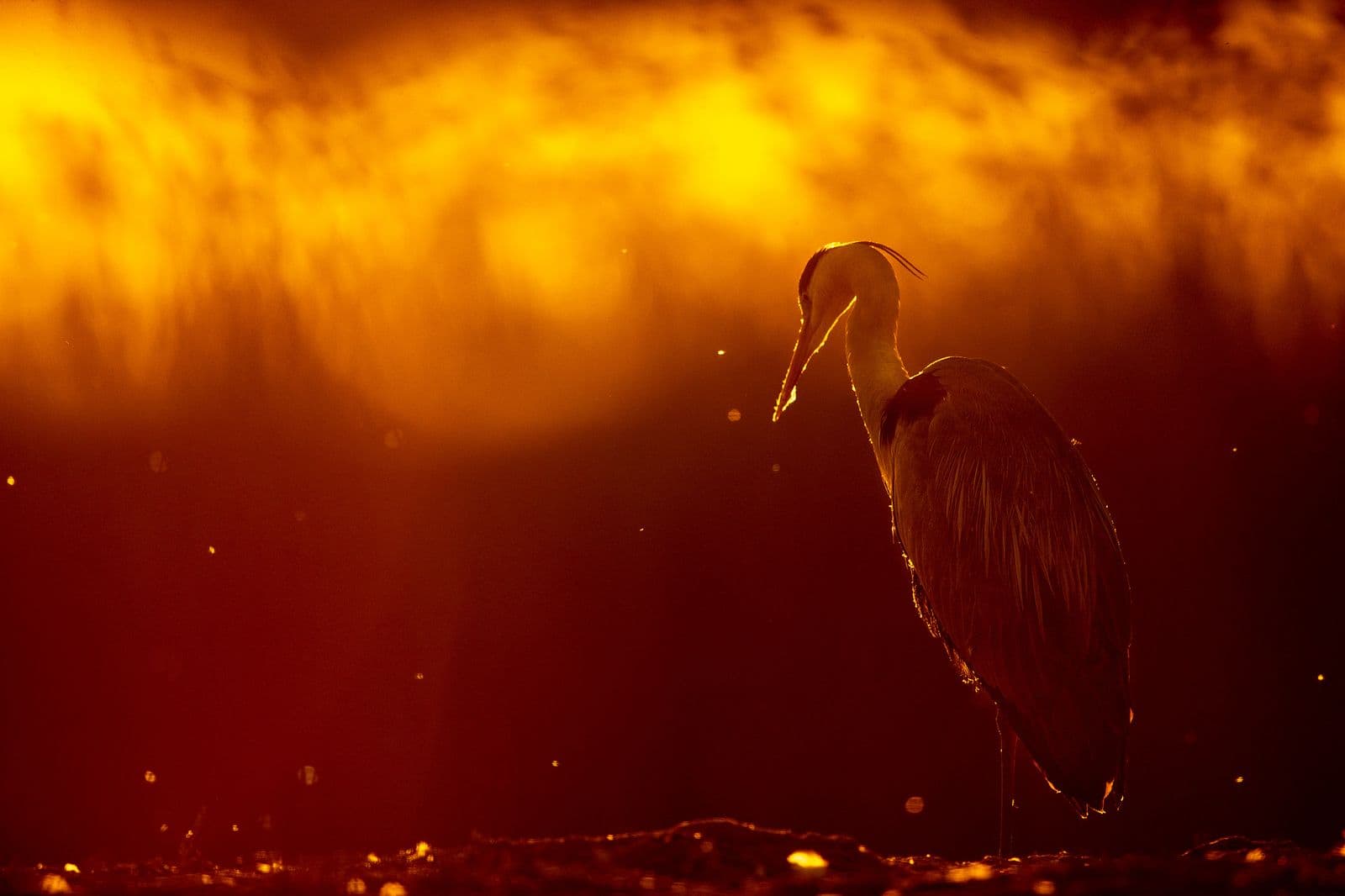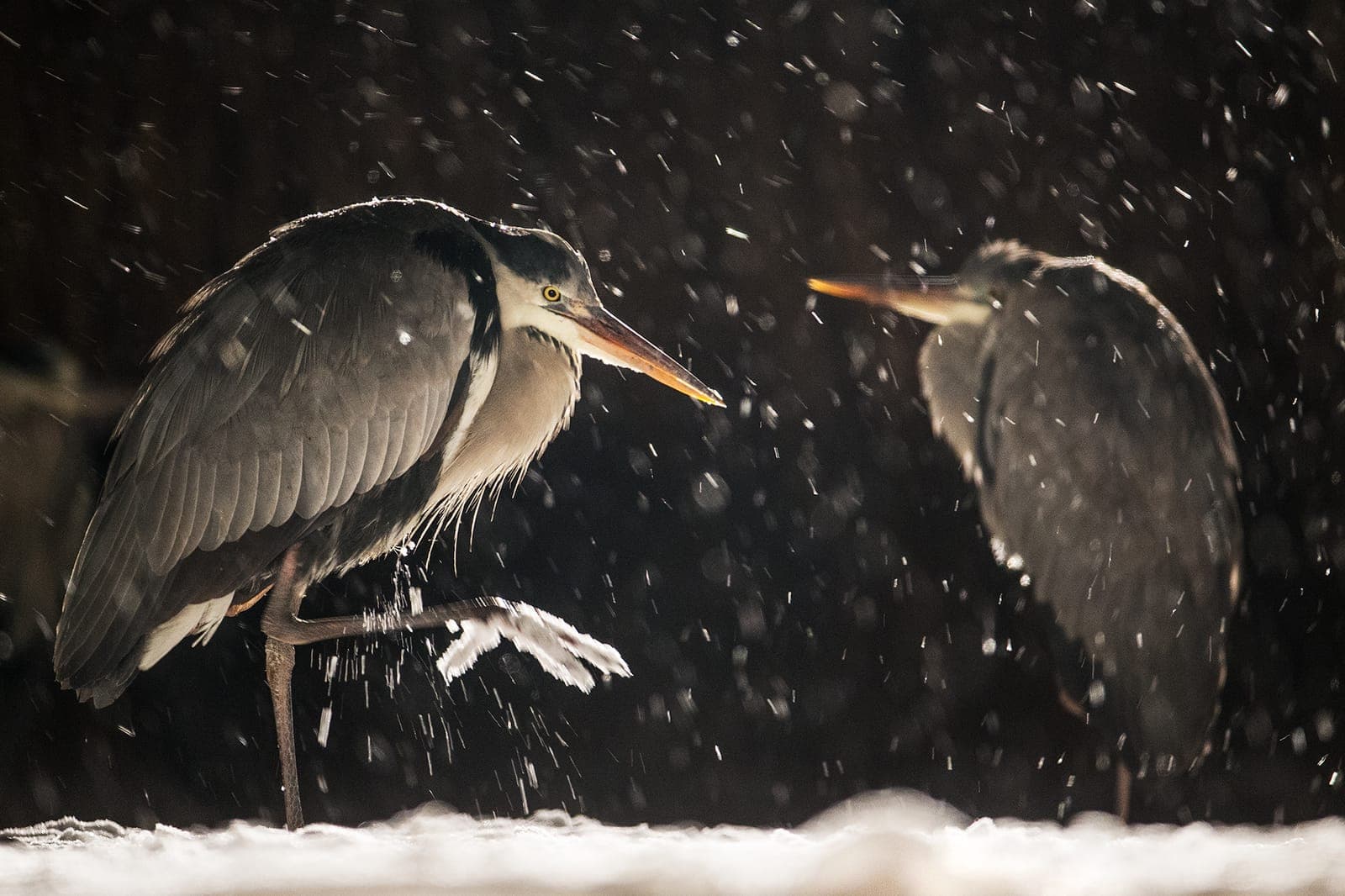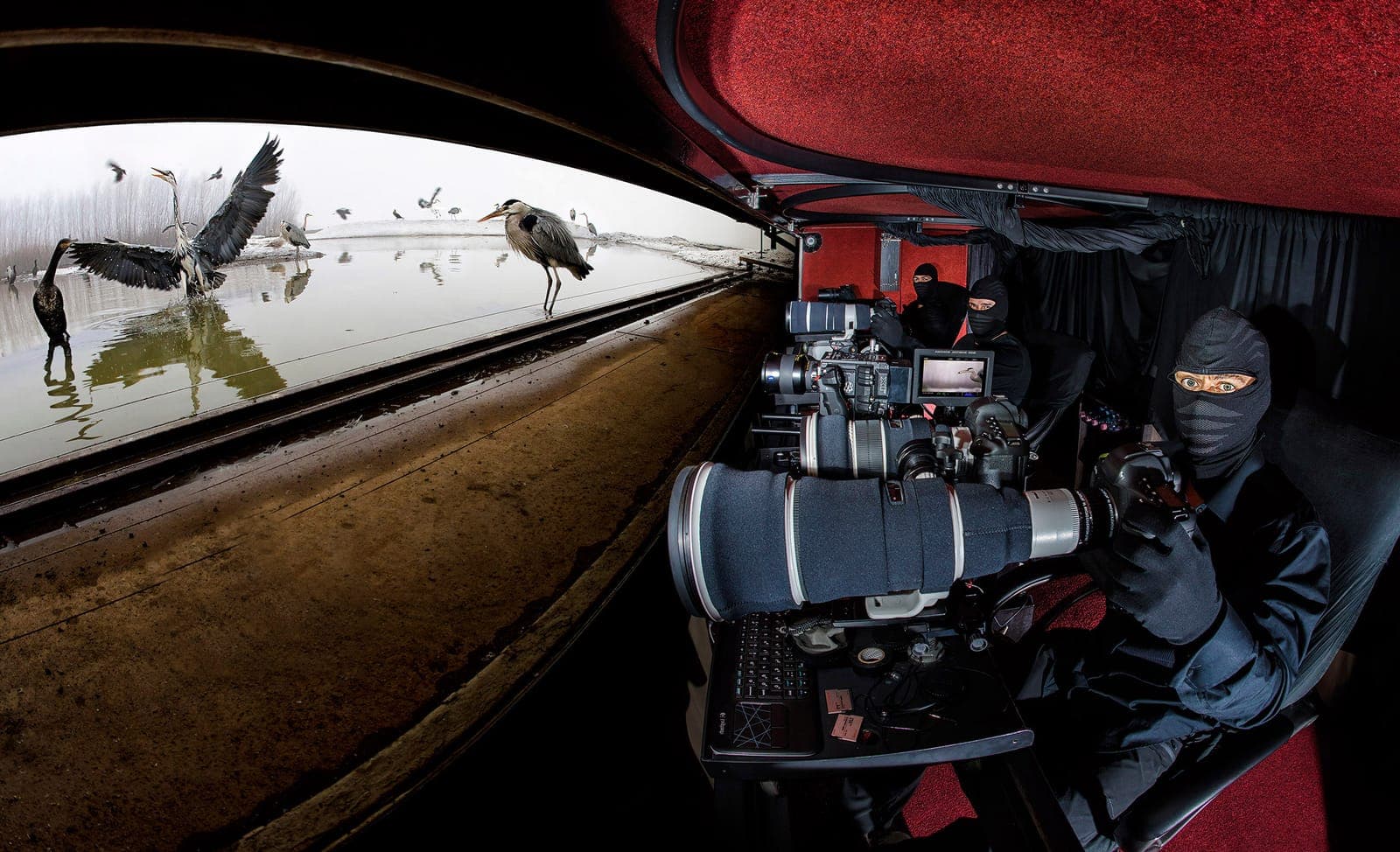
Hungary has quickly become Europe's leading destination for bird photography from hides. The Hungarian puszta — the vast steppe landscape east of the Danube — hosts exceptionally rich birdlife, and the country's photographers have developed a network of specially built hides that is unmatched in Europe.
What makes Hungary unique is the combination of outstanding species diversity and professionally designed hides. Each hide is constructed with the photographer in mind: well-planned shooting apertures at the right height, natural backgrounds without distracting elements, and water holes or feeding sites positioned for optimal light. The result is the opportunity to photograph shy species at extremely close range — often under five meters distance.
Area
93 000 km²
Bird species
400+
Photography hides
200+
Best season
Mar–Maj & Sep–Okt
Bee-eaters — jewels of the puszta
The European bee-eater (Merops apiaster) is undoubtedly Hungary's most photographed bird, and for good reason. With its rainbow-colored plumage in turquoise, yellow, green and rust-red, it is one of Europe's most spectacular birds. In Hungary, bee-eaters nest in sand banks and clay slopes, and specially built hides are placed just a few meters from the breeding colonies.
The best time for bee-eater photography is May–June, when the birds are most active with breeding and insect hunting. Early mornings (05:00–09:00) provide the warmest light against the colorful feathers. Bee-eaters landing with prey in their bills — bees, dragonflies, butterflies — offer dramatic action shots with fantastic color combinations.
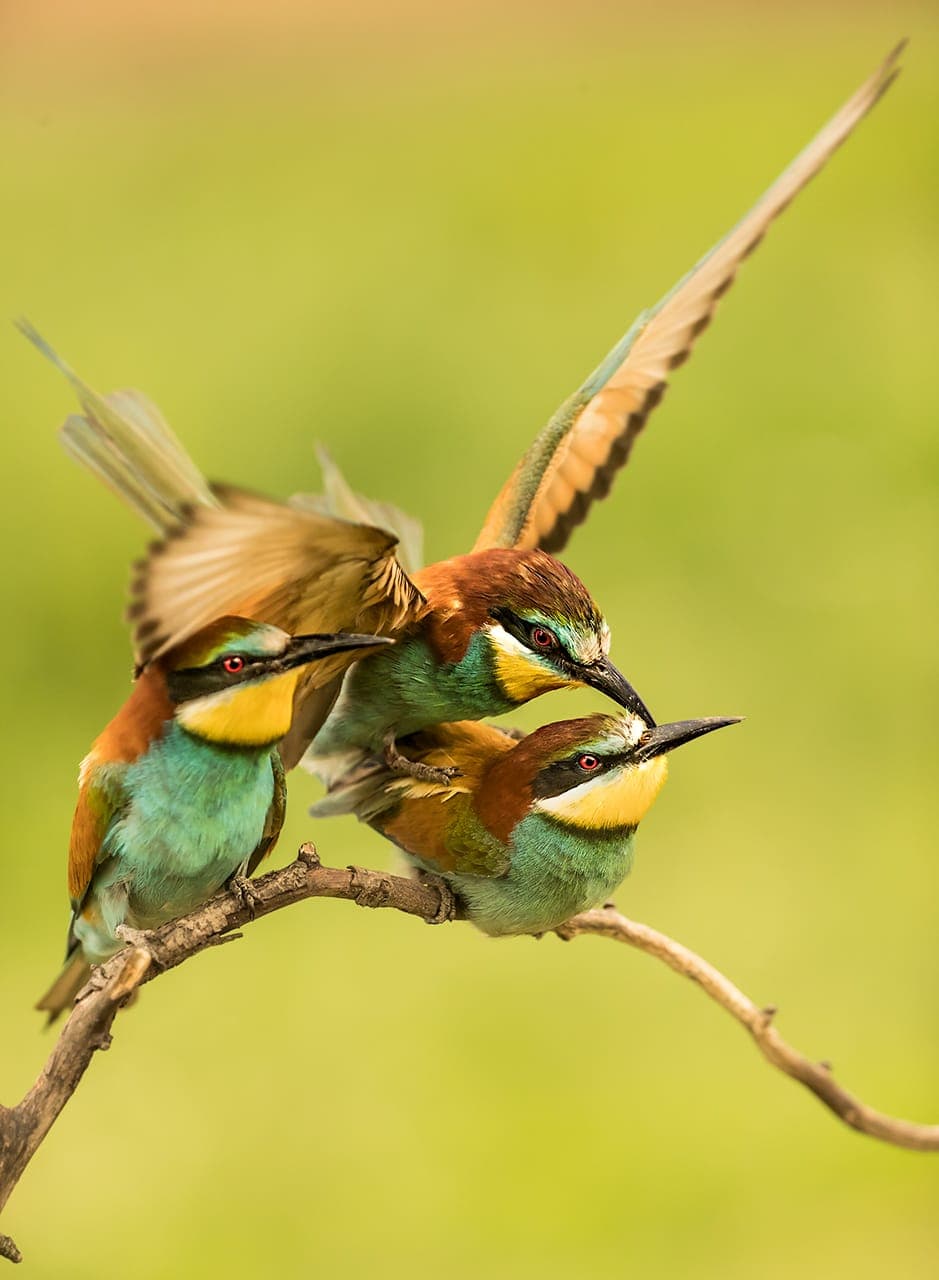
European Bee-eater (Merops apiaster)
Europe's most colorful bird breeds in colonies in sand banks. From hides at 3–5 meters distance you can capture every detail in the rainbow-colored plumage. Bee-eaters landing with prey in their bills — insects struck against the branch — provide action shots that combine movement, color and behavior in the same image.
Hide photography
Hide photography requires patience and preparation. Arrive at least 30 minutes before dawn and move minimally. Use 300–600 mm telephoto lenses on tripod or beanbag. Pre-focus on the landing spot and use back-button focus for quick reaction. Shutter speed 1/1600 s or faster for flight shots. Dress dark and avoid perfume — birds are sensitive to foreign scents.
Rollers — the rare beauty
The European roller (Coracias garrulus) is one of Europe's most sought-after birds for photographers — rare in most countries but relatively common on the Hungarian puszta. With its striking blue plumage and acrobatic flight patterns, it offers spectacular photographic opportunities.
The best hides for rollers are equipped with natural perching branches and water holes that attract the birds to predetermined positions. During breeding season (May–July), rollers fly back and forth with prey for their young, providing repeated opportunities for flight shots. Their characteristic rolling courtship flight — which gave them their English name "roller" — is one of bird photography's great moments.
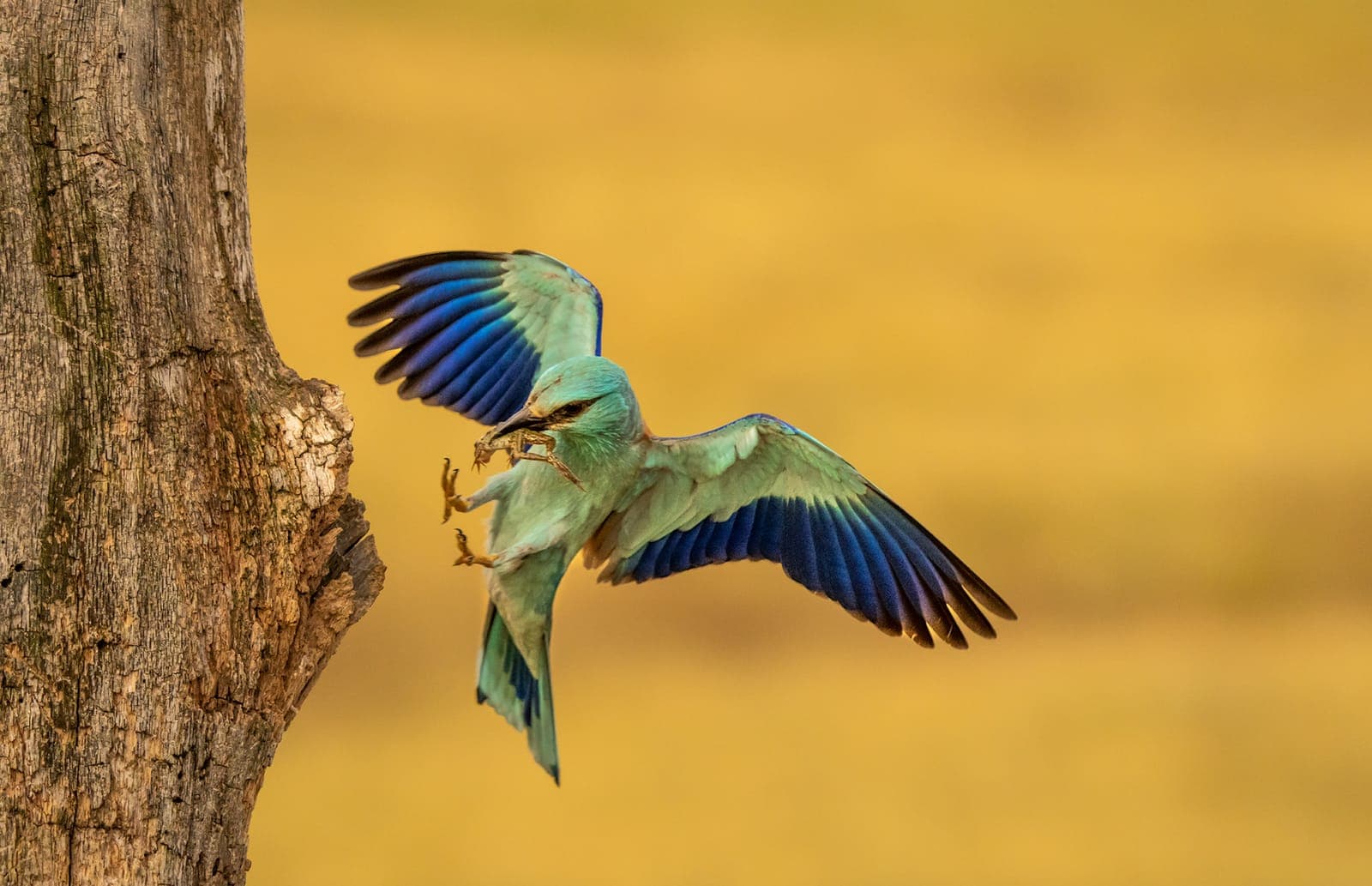
European Roller (Coracias garrulus)
With its brilliant blue tones and warm rust-brown accents, the roller is a bird that feels almost tropical in the European landscape. At close range from a hide you can capture everything from still portraits to moments when it strikes prey or sweeps back to the branch with an insect in its bill. The result is images filled with color, form and movement.
Raptors at feeding stations
Hungary offers exceptional opportunities to photograph birds of prey. Specially built hides at feeding stations attract buzzards, imperial eagles, white-tailed eagles and red-footed falcons. During winter, impressive numbers of raptors gather — sometimes hundreds at the same location.
The most sought-after species include the eastern imperial eagle (Aquila heliaca), which breeds in Hungary with about 200 pairs, and white-tailed eagle that overwinters in Hortobágy National Park. Hides at feeding stations provide dramatic images of interactions between species — hierarchies, conflicts and impressive flight shots against the open puszta.
| Months | Season | Description | Rating |
|---|---|---|---|
| Mar–Apr | Early spring | Bustards, cranes. Raptors at feeding stations. Spring flowers on puszta. | |
| May–Jun | Peak season | Bee-eaters, rollers in full breeding. Best hide photography. Long days. | |
| Jul–Aug | Summer | Young birds leave nests. Intense heat can limit midday activity. | |
| Sep–Oct | Autumn | Autumn migration. Crane gatherings in Hortobágy (20,000+). Raptors. | |
| Nov–Feb | Winter | Overwintering raptors at feeding stations. White-tailed eagle. Fewer species but dramatic scenes. |
Equipment for Hungary
Camera bodies
Full frame with fast autofocus and high burst rates (at least 10 fps) to capture birds in flight. Silent shutter is an advantage in hides — mechanical shutter noise can frighten sensitive species.
Lenses
- 500–600 mm telephoto — standard choice for hide photography, provides frame-filling images at short distances
- 300 mm f/2.8 — excellent in low light, morning and evening
- 100–400 mm zoom — flexible alternative for varying distances
Accessories
- Stable tripod with video head (smooth movements in hides)
- Beanbag as alternative to tripod (quieter, lower profile)
- Camouflage lens cover (reduces reflections in shooting apertures)
Why Hungary?
- World-leading hides — Specially built photography hides with perfect light and natural backgrounds, often at under five meters distance
- Bee-eaters & rollers — Europe's most colorful birds, reliable and at close range
- Abundant raptors — Imperial eagles, white-tailed eagles and falcons at professional feeding stations
- Affordable — Significantly lower costs than western Europe, with higher quality photographic opportunities
- Easy travel — Short flight time from Stockholm, good roads and English-speaking guides