
With a great chance of cubs
Iberian Lynx Feast in Spain – Extra Departure Added
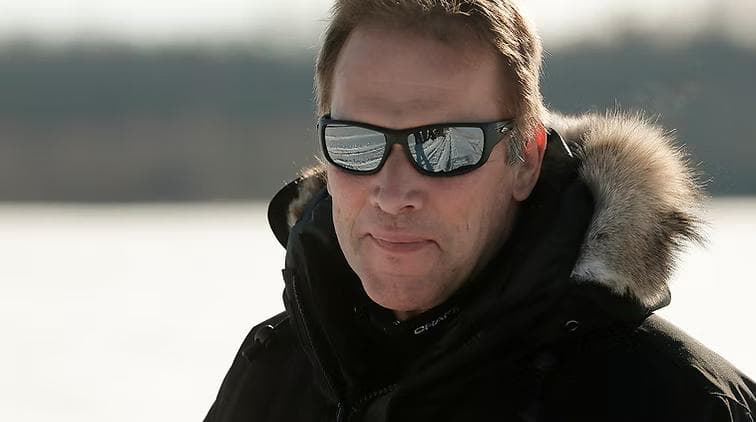
With guideBrutus Östling
Brutus Östling
Trip description
Additional departure with an extra hide session.
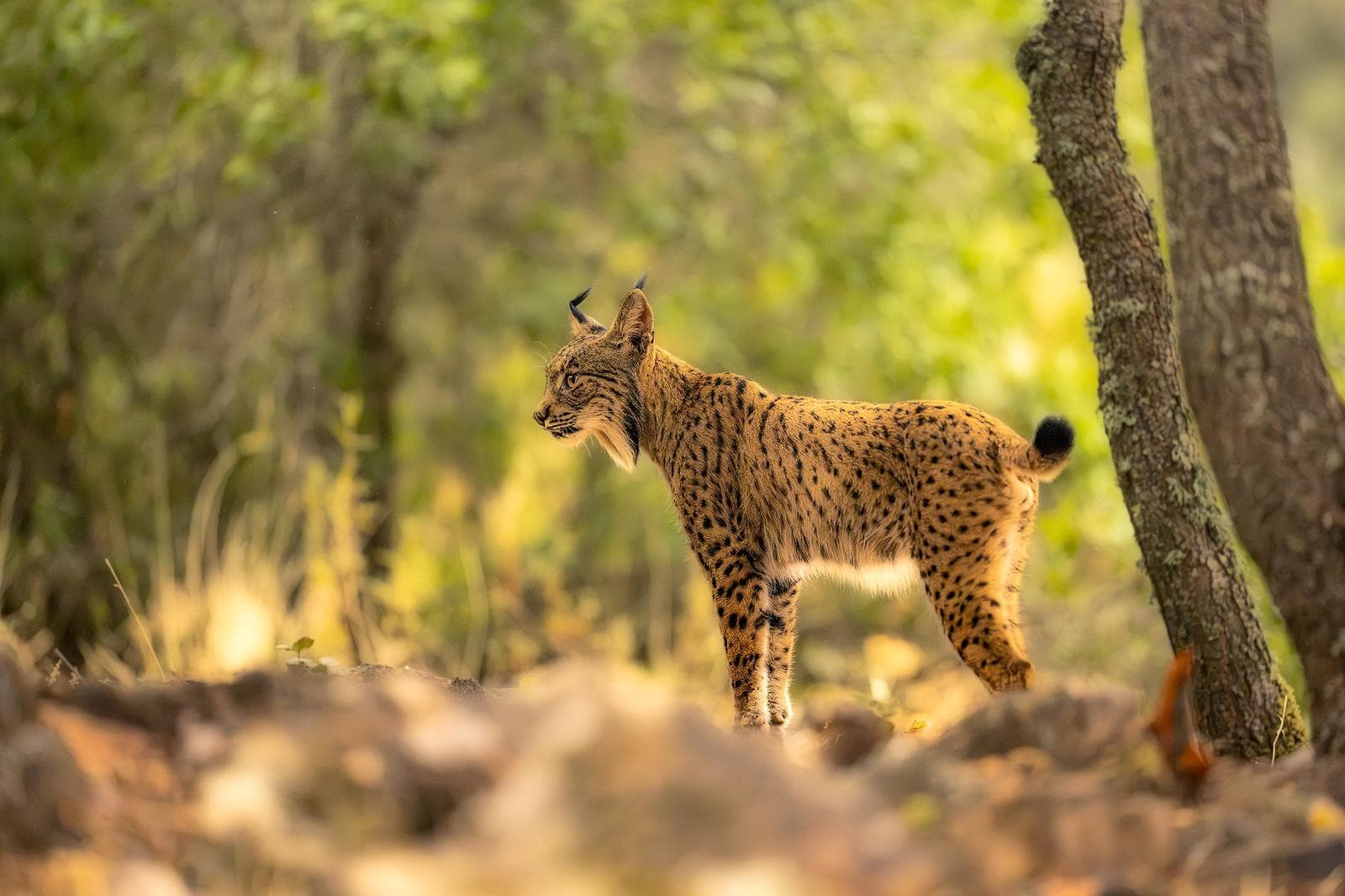
Join Brutus and FocusRAW to La Mancha and Andalusia to photograph the rare Iberian lynx, with great chances of also being able to photograph Iberian lynx cubs.
The sun sinks over the rolling hills of Andalusia. A golden light still illuminates the barren landscape. In the Spanish dehesa – the sparse woodland where ancient oaks cast long shadows – stillness reigns. The air is saturated with the scent of dry earth, wild thyme and sun-warmed lavender. Everything seems to slumber in the last evening warmth.
But then the silence is broken. Though it is not a sound, rather a change in the atmosphere. A presence.
Out of the dense thicket the Iberian lynx emerges. Perhaps the world's most endangered feline moves like a shadow across the dry ground. Every step is perfectly calculated, completely silent.
The Iberian lynx's coat is a masterpiece of nature's camouflage: a light sandy base densely scattered with coal-black, distinct spots that blend in with the play of shadows among the oaks. The most striking thing is her face. The characteristic, long black ear tufts cut through the air like two small spears, constantly in motion to catch nature's faintest whisper. Around her cheeks hangs the bushy, characteristic beard that gives her an almost mystical expression.
She pauses on a rock. Her bright and piercing gaze sweeps across the terrain. When the amber eyes for a brief moment meet our camera lenses, time stands still. It is a gaze filled with the lynx's power and a deep watchfulness. In that moment it becomes obvious why this animal is the true pride of the Iberian Peninsula.
As quickly as she appeared, she turns back. With a featherlight leap she glides down from the rock and is swallowed up by the darkening thicket.
Our photography trip will spend time in two different areas. Brutus and Agneta have visited both, Brutus a couple of times, and FocusRAW has also brought a photographer group to one of the places; we made an unannounced extension of a vulture-feast trip.
The images below are Brutus and Agneta's images from the two areas, but we have also asked to borrow some images of Iberian lynx cubs from the hide owner - a handful of images at the very bottom among the pictures.
We will in fact make this trip when there is a great chance of seeing cubs in front of the hides. From the middle of July the cubs usually come to the waterholes; in recent years they have been possible to photograph from the middle of July to October, though of course no guarantees exist. However, it is close to a guarantee for the Iberian lynx. - In addition: with two different areas the probability increases; at both places cubs can usually appear from the beginning or middle of July onwards.
Brutus has sat in the hides on fourteen different occasions and had Iberian lynx at nine of the sessions. Agneta a few fewer times but as usual with even greater luck.
We have booked seven plus six hide sessions, that is 13 sessions in total. We believe that is more than anyone else has. That is also why the price is perhaps a thousand kronor higher.
A little over a hundred years ago there were around 100,000 individuals in the region, but during the 20th century the population collapsed dramatically due to hunting, changed agriculture and a lack of food. Around the turn of the millennium the species was extremely close to extinction with fewer than 100 individuals remaining in the wild. In 2012 the Iberian lynx was regarded as the world's most endangered feline species. Thanks to intensive and long-term conservation efforts, the species has managed to make a truly historic recovery. The population has now passed over 2,000 individuals on the Iberian Peninsula.
The Iberian lynx (Lynx pardinus) is smaller than our Swedish lynx. It usually weighs between nine and fifteen kilos.
Unlike its larger relatives, the Iberian lynx is an extremely specialised hunter whose survival hangs on a single main prey species, wild rabbits, which make up over 80 percent of the Iberian lynx's total diet. When diseases such as rabbit plague struck the rabbit populations, it led to an acute starvation catastrophe for the lynxes.
The Iberian lynx thrives best in open, dry scrubland and in the typical Mediterranean forests with cork oak. Today the largest populations are found in Andalusia but also in the region of Castile-La Mancha. In the large wetland area of Donana too we find the Iberian lynx.
The first place is a large estate in La Mancha, a 2,260-hectare property located very close to the northernmost hills of the Sierra Morena mountain range.
The estate borders the Autovía del Sur (southern motorway) to the west and actually has its own exit to this expansive property. The estate has always been a well-known property for its high density of partridges and wild rabbits.
Most hides are dug into the ground, with a waterhole in front of them where the lynxes come to drink. The photography distance is 7-8 metres at these locations, which makes 300 or 400 mm telephoto lenses suitable.
The second place is in a very reliable Iberian lynx area. And it is not just a place to photograph lynx. It is a private property in Sierra de Andújar managed by the veterinarian Antonio to benefit the species; the place is an authorised active conservation project and an experience created for photographers, naturalists and travellers. It is in fact the only place authorised by regional authorities for this.
Some advice and rules of conduct:
- Bring your own tripod and tripod head as well as all your usual photographic equipment.
- Dark or camouflage-coloured clothing is a must in the hides. Avoid bright colours.
- The hides at the latter place do not have one-way glass. You photograph directly through the openings, which gives considerably better image quality, but also means that clothing choices, silence and careful movements are especially important.
- Do not use perfume, aftershave or products with a strong scent.
- Photography with flash is not permitted.
- Mobile phones should be completely silent, and sound as well as movement inside the hides should be kept to an absolute minimum.
- Comfortable shoes and layered clothing are recommended, especially for the early morning and evening sessions.
- It is also good to bring enough batteries, memory cards and other equipment that may be needed during long photography sessions.
Price
Clear pricing. Small groups. Focus on the images.
Early bird price
3,050 EUR
≈ $3,500 USD
per person
Normally 3,250 EUR
Save 200 EUR
Valid until 25 October 2026
Shared double room
Booking & peace of mind
Booking deposit
500 EUR
Travel guarantee included
Small group with personal guidance
Planned for the right light, place and pace
You’ll get confirmation and next steps by email.
Photo gallery
Itinerary
Day 1:
We meet at Madrid airport no later than 12:30. In two rental cars or the Fokus VW Caravelle van, we drive to the area in La Mancha where the trip begins. We check into the hotel at around 15:00.
At 17:00 we head to the large private reserve where we will be spending the next few days for a first hide photography session.
Day 2 and Day 3 and Day 4:
We leave our hotel at around 6:00 and take a breakfast package to have in the hides. The morning hide session starts just before daylight and we sit for 3-4 hours.
Lunch near the hotel. Each person pays for this themselves.
Afternoon/evening session in the hide from around 17:30 until it gets dark, 3-3.5 hours. We bring something to eat or eat on our return.
There are more than ten hides in the area and almost all of them have toilets.
Day 5:
Either we have our only free morning of the trip and eat breakfast in peace at the hotel before packing up our things and heading to the second area, about two hours south in Andalucia. Or, with luck, we may sit in the hide this morning too.
At around 15:00 we check into the new accommodation.
Here we will stay very centrally, right inside the hide area itself, at the "lodge" located barely 100 meters from the hides.
At 18:00 we walk the short distance to the hides. We have booked the main hide, but we will be able to switch to one of the side hides during some sessions, if we wish. However: the main hide is the most centrally located. There is a proper toilet in the hide house. And we choose ourselves how long we want to sit. You can leave the hide whenever you like and go up to the "lodge". On the two different occasions Brutus Östling visited this place - one time with a group - he sat until around 22:00-24:00. There is lighting at night. (Some hides have been rebuilt since April when we were last there with a group; two hides are now dug into the ground so that you can photograph from ground level.)
Day 6 and Day 7:
Breakfast at 6:00. At 6:30 we walk down to the hides and sit as long as we like.
Lunch at 13:30.
At 18:00 we walk down to the hides again and sit as long as we like and have the energy for. We bring a package with evening food and drinks.
Day 8:
Breakfast at 6:00
Hide session at 6:30
We leave the hides no later than 11:00, pack up our things and drive towards Madrid airport, about 3-3.5 hours.
The trip ends at the airport. There are usually late flights to Copenhagen or other flights to Stockholm/Oslo. No flights earlier than 18:30.
Subject to minor changes and price increases from our suppliers; we have this year's prices.
Practical information
Dates
17 - 24 August 2027
**Regular price: ** 35,400 SEK / €3250
**Early-bird price until 30 October 2026: ** 33,400 SEK / €3100
Booking deposit
5,000 SEK, €500, see below.
Photographic leader
Brutus Östling
Number of participants
Min 5 / Max 5 - if we have a couple sharing a double bed
Included in the price
Accommodation, shared double room, essentially all meals with a few exceptions, see daily program.
Transport from the airport, to the various hides and return to Barcelona airport
Eight hide days and guiding by our photographic leader. Seven nights.
Accommodation
The first accommodation is incredibly charming and pleasant, with a receptionist who makes you simply love him for his helpfulness. The accommodation has a rating of 9.3 out of ten possible. Very personal but tastefully furnished. Despite its size, it has an elevator. Wifi at the hotel worked well even in the rooms when we stayed there. Welcoming staff with a café on the ground floor, but only open for us.
At the second place we stay at the lodge; there is a pool but it is probably just us and perhaps a few others staying there. Meals are arranged by Shary, really nice, she is also one of the guides to the hides. With the ability to improvise, for example vegetarian food, as long as she is told a little in advance.
Almost all meals except one or two are included in the price - according to the daily program.
Not included in the price
Round-trip flights to Madrid, any tips, insurance and other items of a personal nature. Cancellation protection.
The meals not mentioned.
Single supplement applies
4,50 SEK / €430
Start and end of the trip
The trip begins and ends at Madrid airport; the exact time will be announced later.
Camera equipment
Focal lengths and lenses, and now I'm assuming full frame: everything from 24 mm for landscapes to longer. But 95% of the time you use from 100 to 400 mm. Teleconverter for close-ups. Tripod and tripod head must be brought along.
Clothing
A warm jacket may be needed early in the morning and in the evening, though it can sometimes get really warm.
Hide clothing
In the hides we should wear black or dark shirts, if possible with long sleeves. Thin dark fingerless gloves are great; light-colored fingers are easily seen through the hide glass, but this is not entirely essential.
Availability
The accommodation and hides have some limitations regarding accessibility if you have physical mobility impairments, especially at place number 2. The areas we move around in for photography may involve reduced accessibility with limited mobility. Feel free to call us and ask.
Visa/Passport
Swedish citizens do not need a visa but must have a passport. A passport is required at flight check-in.
Payment terms
The payment terms deviate from our general travel conditions. The booking deposit is paid via invoice in connection with registration.
The booking deposit is 5,000 SEK / . This is non-refundable in case of cancellation.
By 17 February 2027 at the latest, an additional 5,000 SEK is paid, and the remainder is paid 30 days before the trip begins. The booking/registration deposit is never refunded in case of cancellation. In case of cancellation later than 17 February 2027, Fokus retains both the booking deposit and the 5,000 paid by 17 February at the latest. If payment is late but cancellation occurs after 17 February 2027, Fokus is entitled to demand the late payment for the amount then due.
In case of cancellation later than 30 days before the workshop, the full price is charged even if not everything has been paid on time.
Our price is calculated based on a euro exchange rate of 10.75 SEK (21 April 2026).
Additional travel conditions for this trip:
Our price is calculated based on at least 5 participants and a euro exchange rate of 10.75 SEK (21 April 2026). The price is based on 2026 prices; no price increase has been announced, but if the hotel or the hide operator raises the price, Fokus may charge a minor increase corresponding to this price increase, though at most 2,000 SEK. In case of a higher increase, the traveler has the right to cancel free of charge.
We want to avoid having to cancel a trip. In order to be able to run a trip with too few participants, we have a price surcharge for few participants. Then we can still carry it out.
With fewer than 5 photographers, Fokus is entitled to charge 2,000 extra per participant. With fewer than 4 participants, Fokus is entitled to charge each participant 3,000 SEK extra.
Subject to obvious or minor errors.
Good to know
Popular signature expedition
This is one of our most requested tours among wildlife photographers.
See current availability and prices in the booking form above