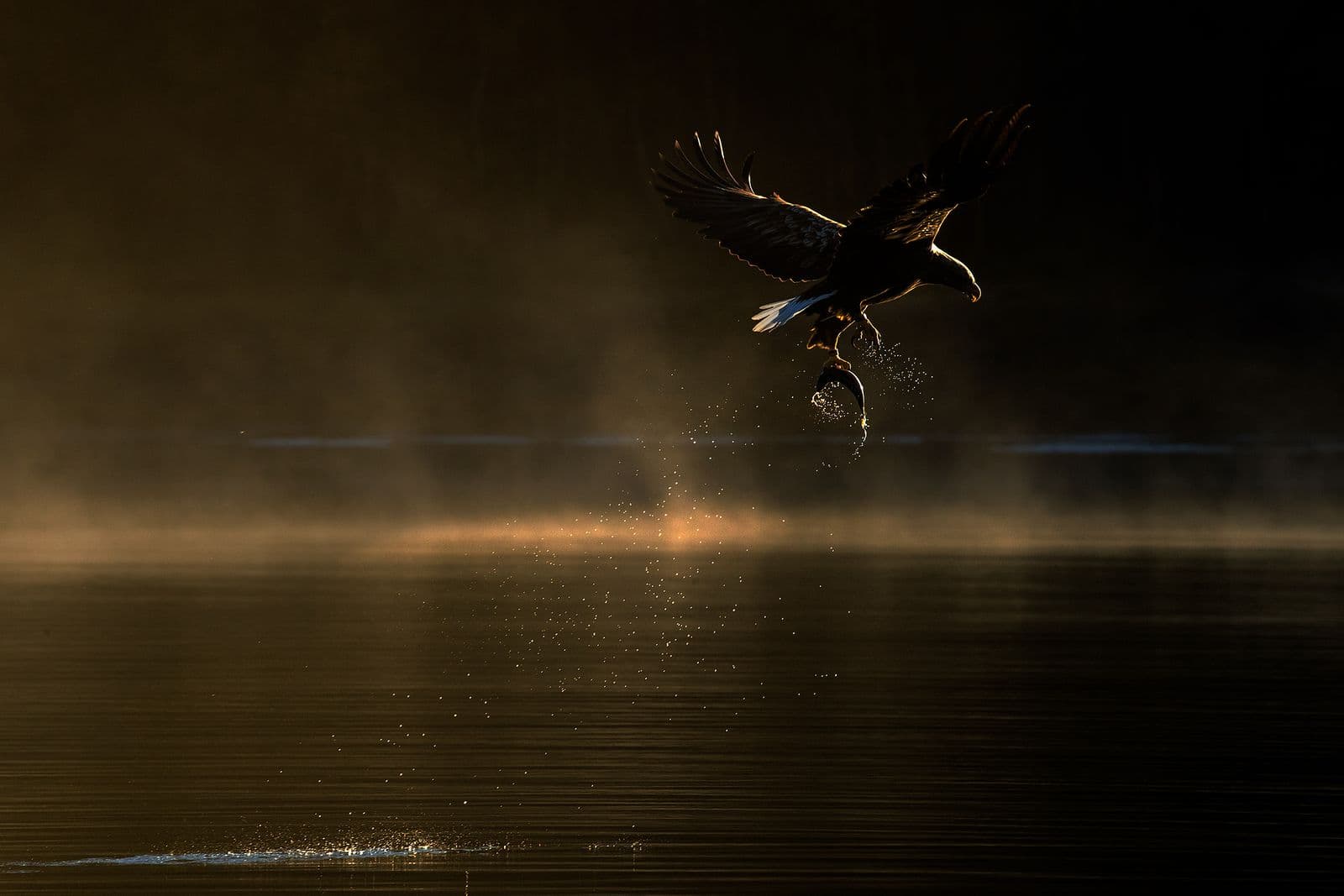
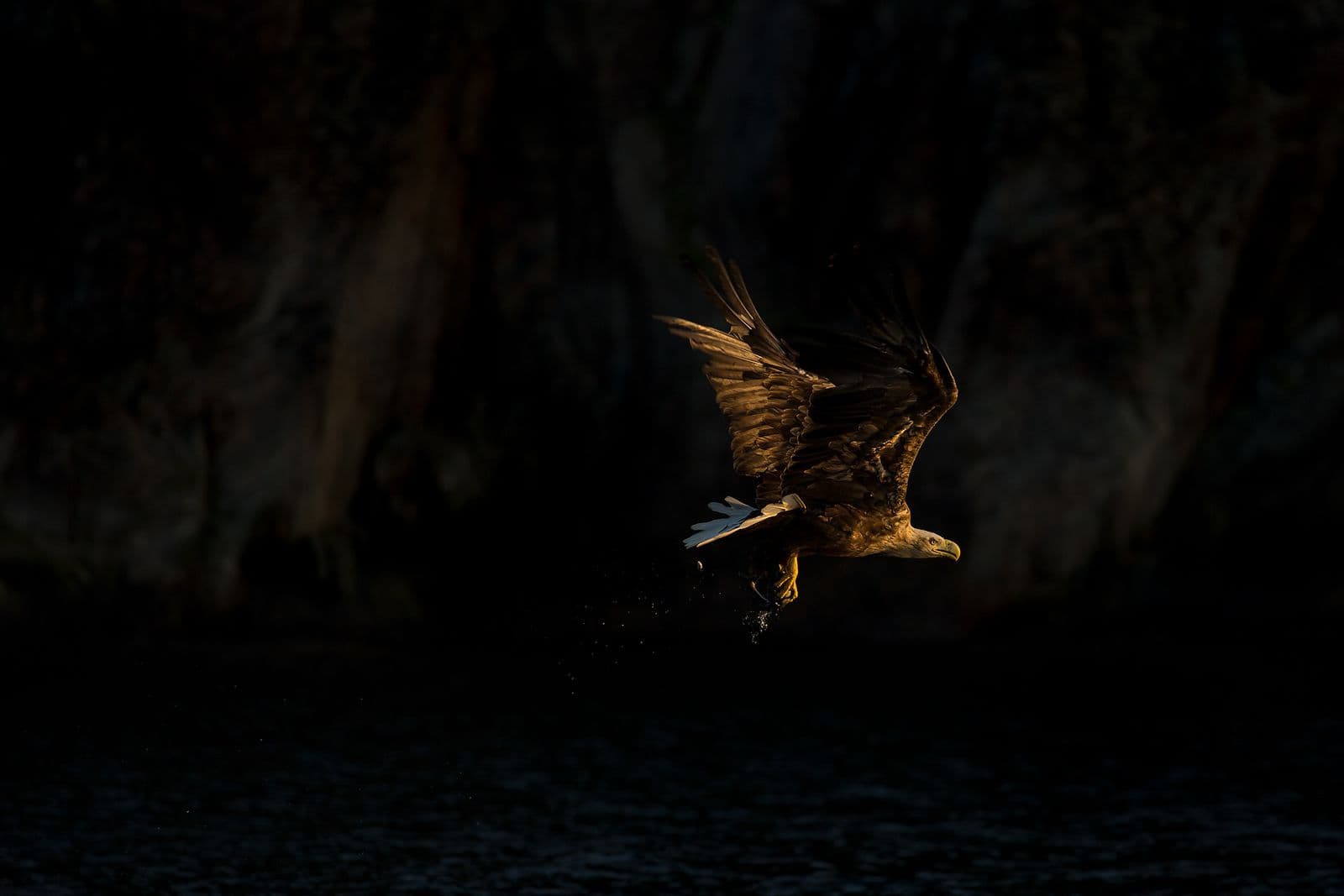
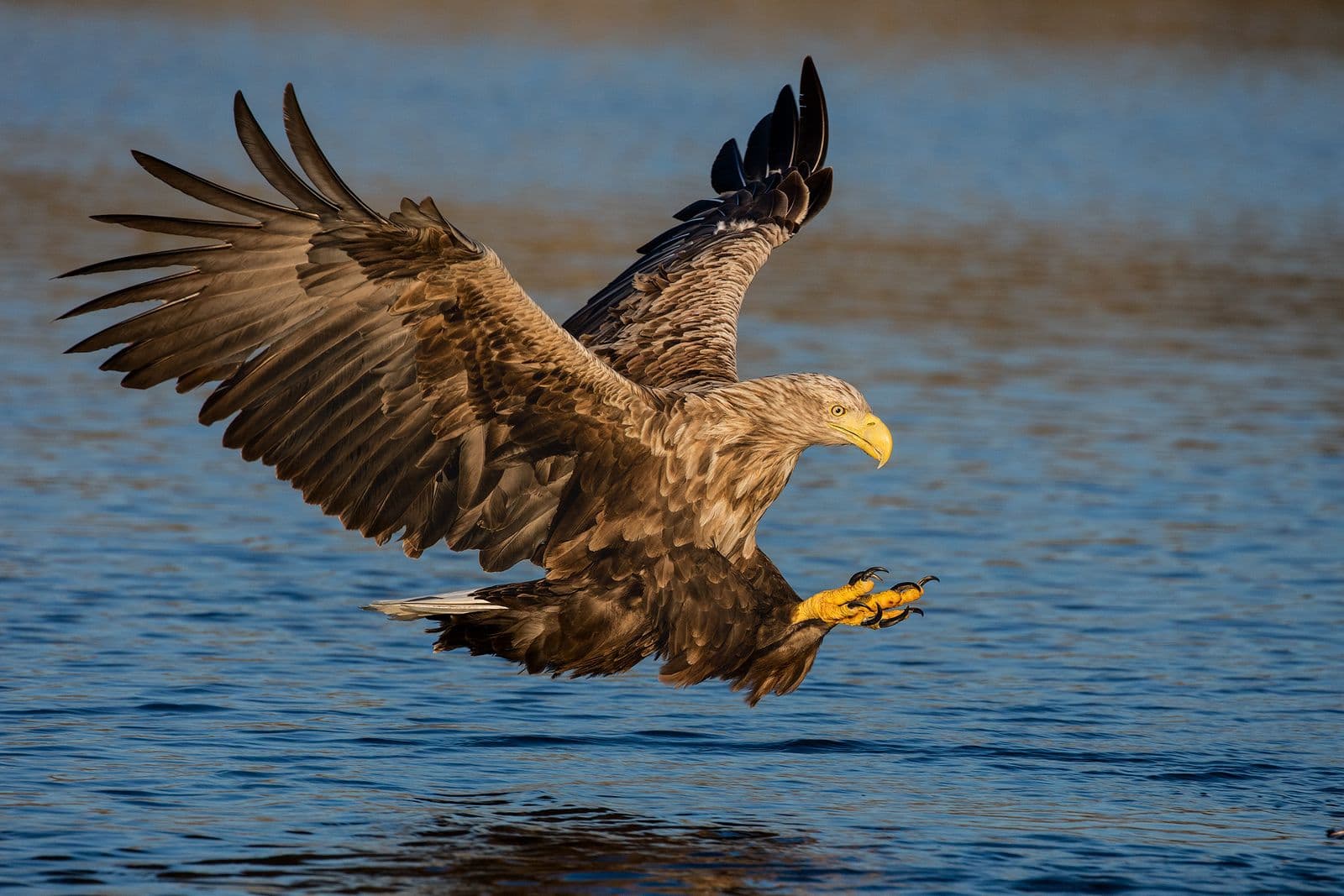
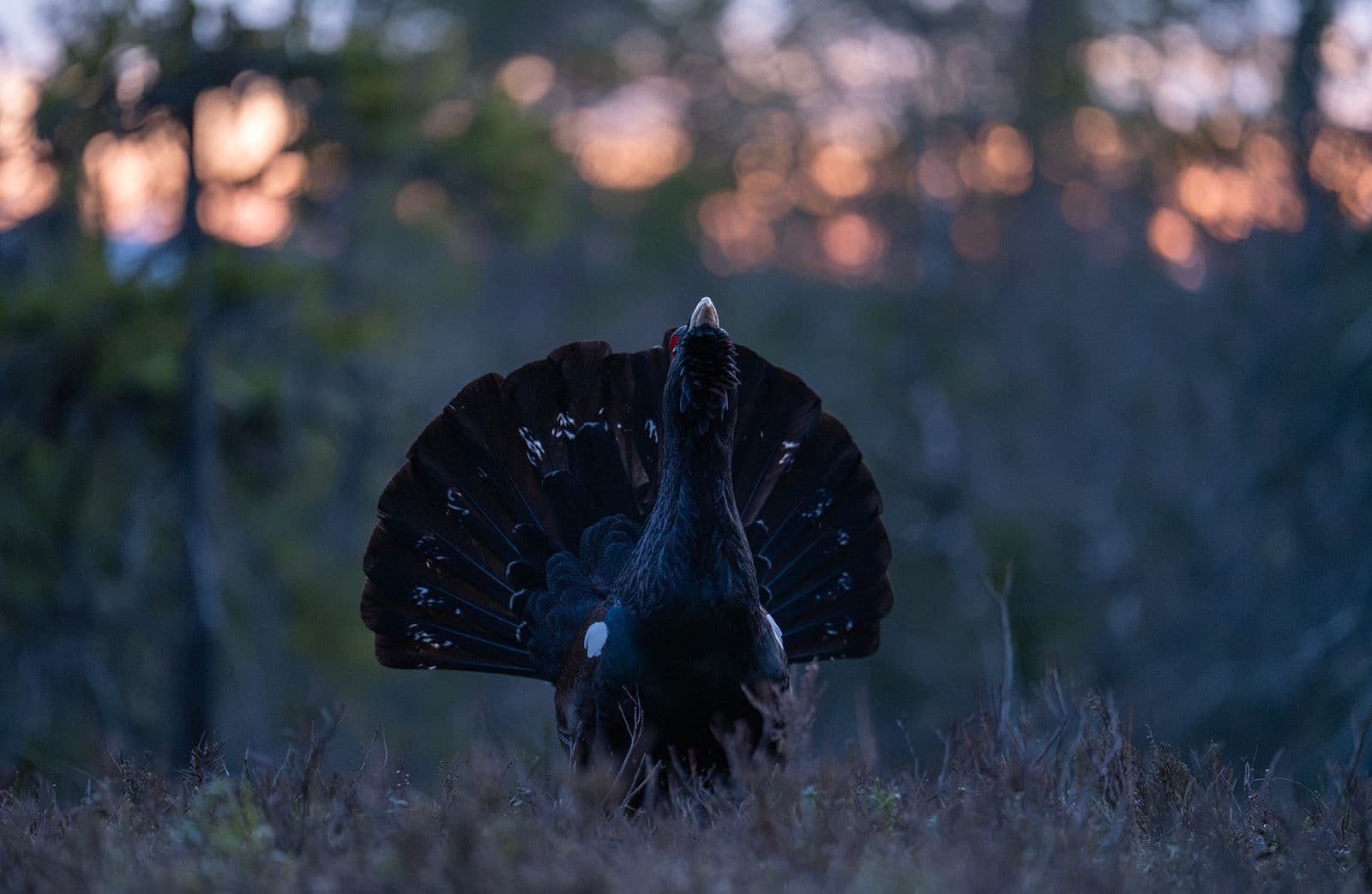
Norway offers a unique combination of dramatic landscapes and accessible wildlife that makes the country one of Europe's premier destinations for nature photography. In the Lofoten archipelago, sea eagles circle over the fjords in unparalleled light — the Arctic winter light stays low on the horizon for hours, creating a soft, golden glow that transforms every image into something extraordinary.
From the snow-covered mountains in the north to the deep coniferous forests in the south, there's abundant wildlife waiting to be documented. Moose wander through mist-shrouded valleys, sea eagles dive for fish in the midwinter light, and northern lights dance across the Arctic sky. For the nature photographer seeking world-class Nordic subjects, Norway is hard to beat.
Area
385 000 km²
Sea Eagles
3 000+
Bird Species
350+
Best Season
Jan–Mar & Nov–Dec
Sea Eagles in Flatanger
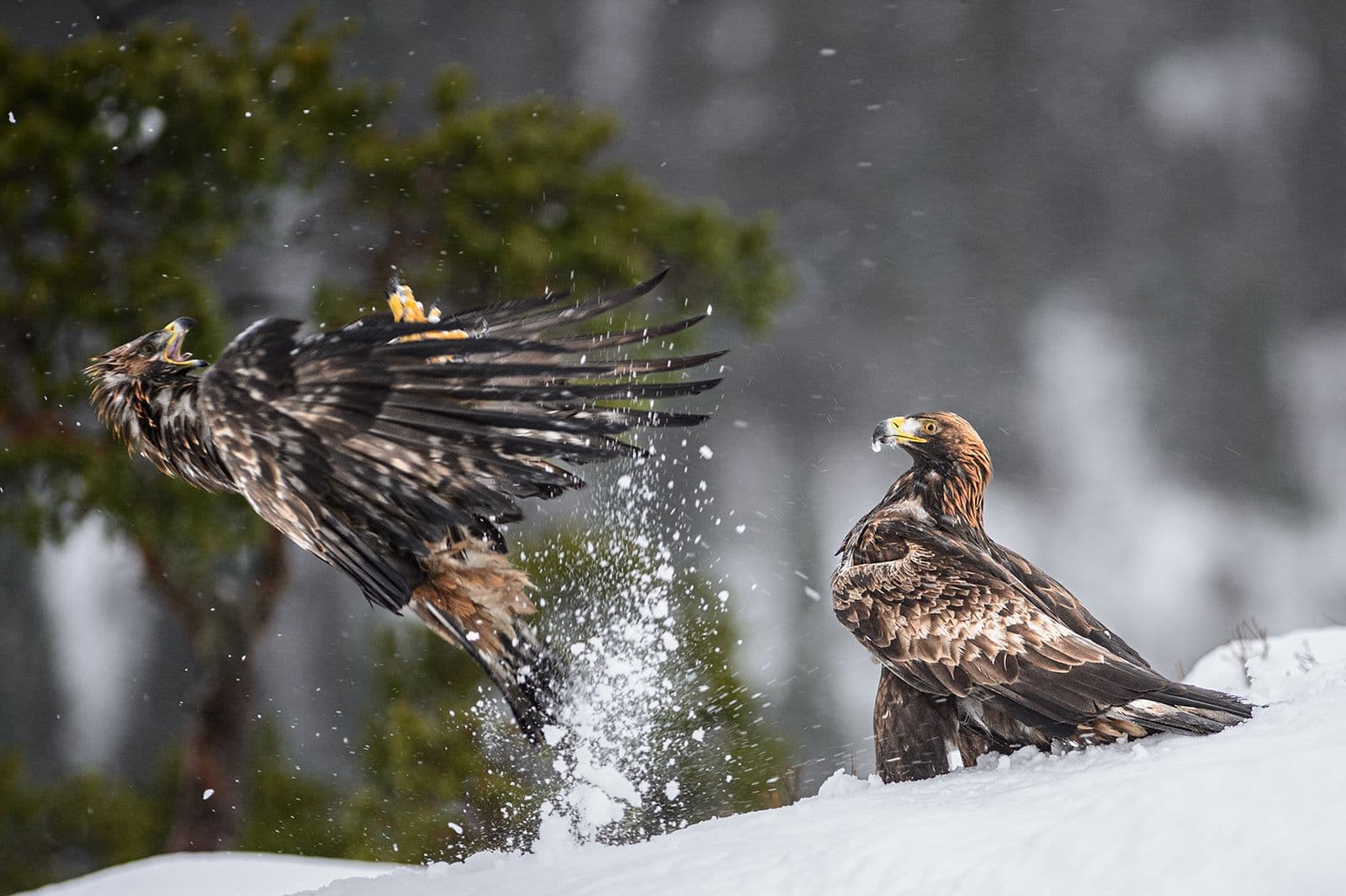
Flatanger is one of the best places in the world to photograph sea eagles — Europe's largest bird of prey with a wingspan of up to 2.5 meters. From specially adapted boats, you can get within 10–30 meters when the eagles dive for fish thrown from the boat.
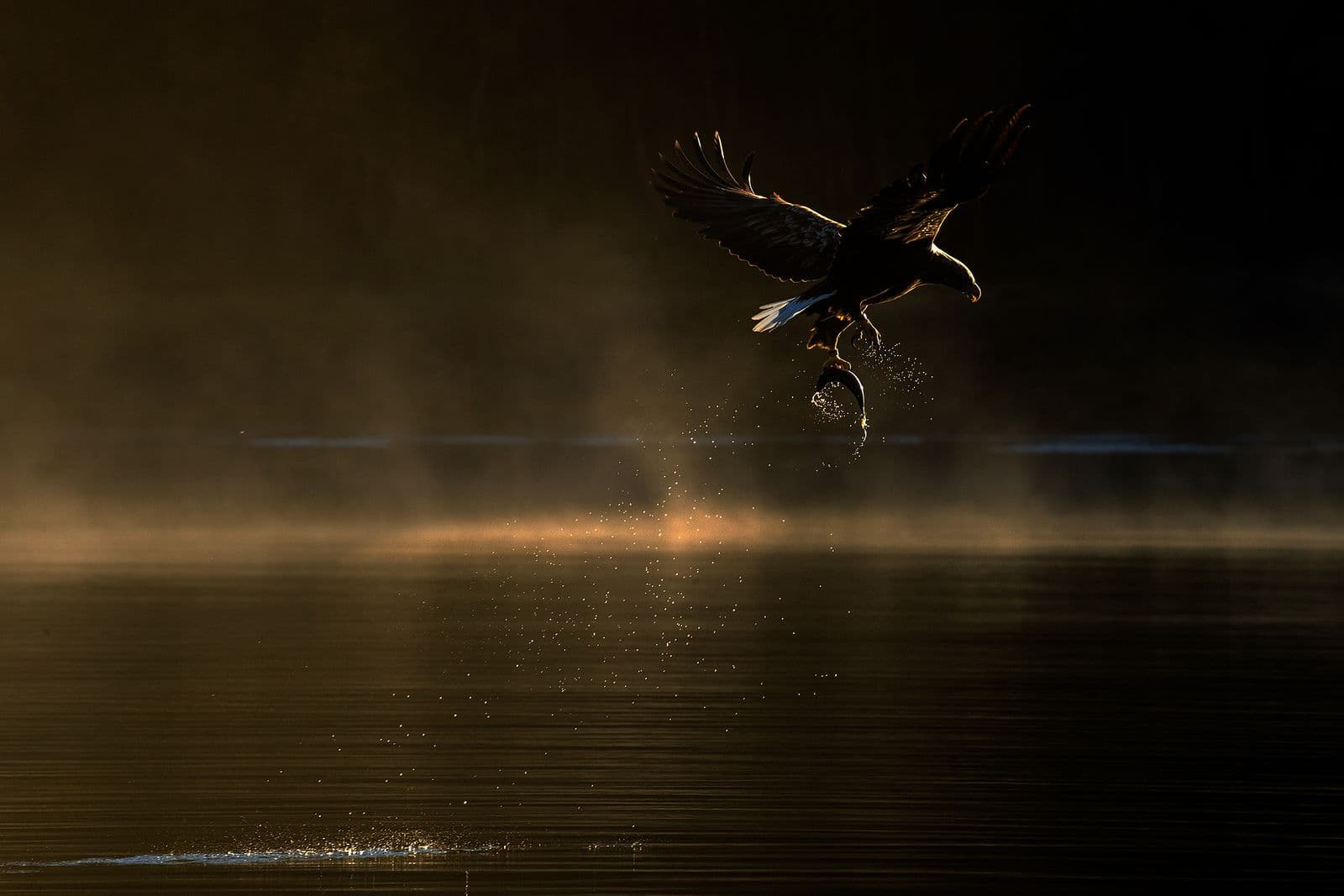
White-tailed Eagle (Haliaeetus albicilla)
Europe's largest bird of prey with a wingspan of up to 2.5 meters. The sea eagles in Lofoten are accustomed to boats and can be photographed at close range when they dive for fish. Their powerful dive — with talons extended toward the water surface — provides dramatic action shots that require fast shutter speeds and precise autofocus.
Eagle Photography from Boat
Use at least 200–400 mm telephoto lens with fast autofocus. Set continuous AF-tracking and at least 10 frames/second. Shutter speed 1/2000 s or faster to freeze wing movement. Underexpose 0.3–0.7 EV to preserve detail in the white tail feathers.
Moose in Norwegian Forests
Norway has one of Europe's densest moose populations with an estimated 120,000 animals. The best opportunities for moose photography are found in the central and eastern parts of the country, particularly in Hedmark and Trøndelag. Early morning — from dawn until about 09:00 — is the golden time when moose graze in open clearings and along forest roads.
In autumn, during the rutting season in September–October, bulls become more visible and less shy. A large bull moose with fully developed antlers in an autumn-colored birch forest is one of the Nordic region's most sought-after photographic subjects. Patience and local knowledge are key — scout feeding areas the evening before and be in position before dawn.
Northern Lights & Night Photography
Norway is one of the world's best places to photograph the northern lights, and the combination with wildlife photography creates unique opportunities. In the Tromsø region and in Lofoten, aurora borealis can be experienced from September to March, with the best conditions around the winter solstice.
For nature photographers wanting to combine northern lights with wildlife, there are exciting possibilities: sea eagles against an aurora-filled sky at dawn, reindeer silhouetted under dancing light bands, or winter mountains bathed in green light. The technique requires a tripod, wide-angle lens (14–24 mm), and high ISO values (1600–6400). Exposure times between 5–15 seconds capture the light bands without them becoming streaky.
| Months | Season | Description | Rating |
|---|---|---|---|
| Jan–Mar | High Season | Sea eagles in Lofoten in fantastic winter light. Northern lights. Snow landscapes. | |
| Apr–Jun | Spring | Midnight sun begins in the north. Seabird nesting. Meltwater and greening valleys. | |
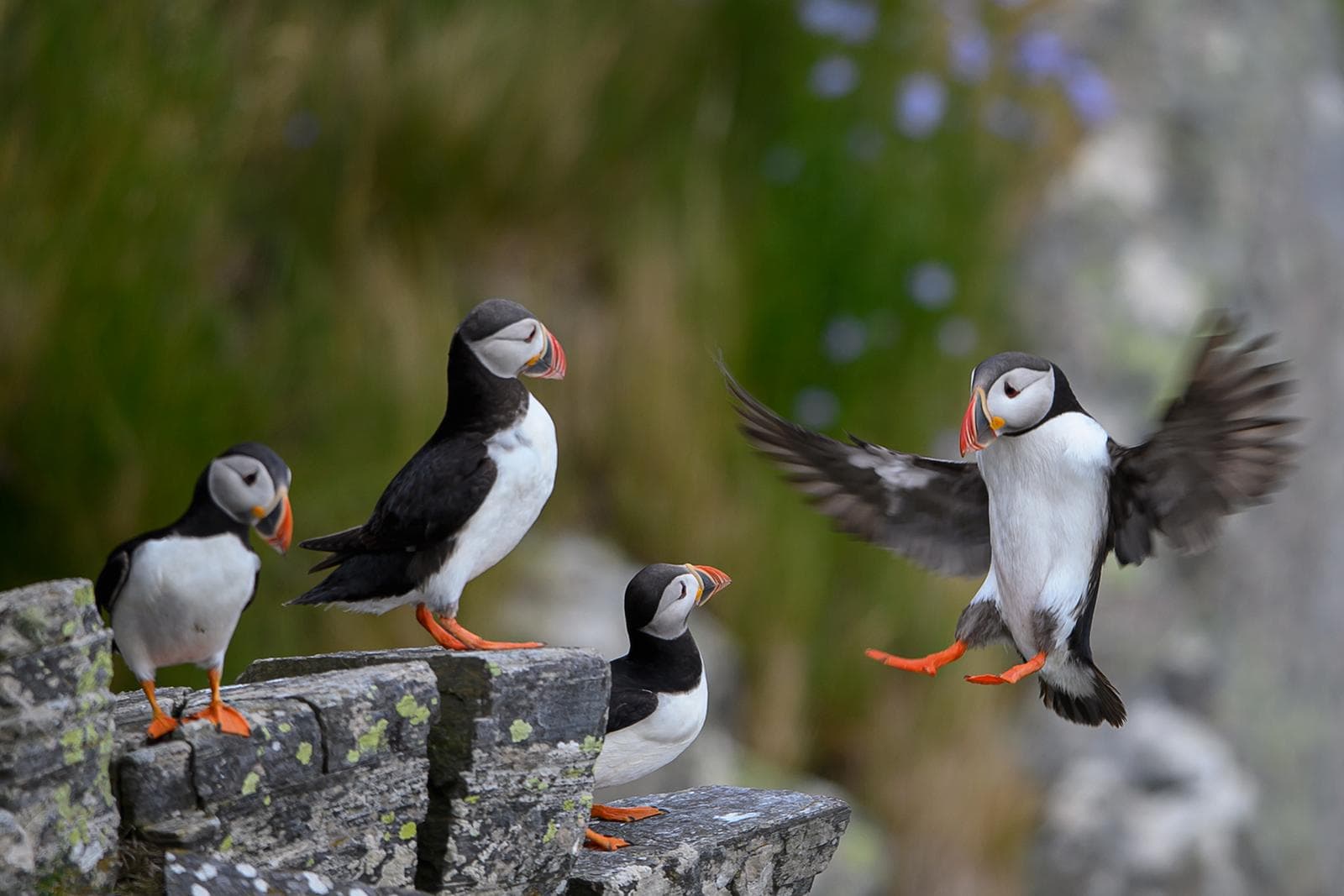
| Jul–Aug | Midnight Sun | 24-hour light in the north. Puffins at Runde. Summer landscapes. | |
| Sep–Oct | Autumn | Moose rutting season. Autumn colors in birch forest. Northern lights season begins. | |
| Nov–Dec | Winter | Sea eagles gather in Lofoten. Northern lights. Blue hour and dramatic light. |
Equipment for Norway
Camera Body
Weather-sealed full-frame body is essential in Norwegian conditions — snow, sea spray and sub-zero temperatures place demanding requirements on equipment. Bring extra batteries, they lose capacity quickly in cold weather (store them close to your body).
Lenses
- 300–400 mm telephoto lens — for sea eagles from boat
- 70–200 mm f/2.8 — for moose in forest clearings and environmental shots
- 14–24 mm wide-angle f/2.8 — for northern lights and landscape images
Accessories
- Sturdy tripod for northern lights photography
- Hand warmers and battery storage against the body
- Rain/snow protection for camera body
Why Norway?
- World-class sea eagles — Lofoten offers the best opportunities in Europe to photograph sea eagles at close range
- Unique Arctic light — The low winter light creates golden illumination that lasts for hours, not minutes
- Northern lights combination — The ability to combine wildlife photography with aurora borealis is unique
- Accessibility — Short travel time from Sweden, good infrastructure and English-speaking guides
- Dramatic landscapes — Fjords, snow-covered mountains and Arctic coasts provide unforgettable backgrounds for every wildlife image