
Truly world-class white-tailed eagle photography in Norway
Realm of the Eagles 2027
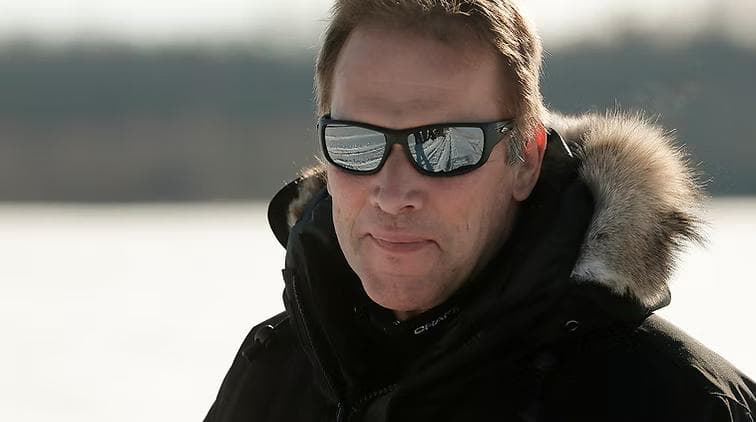
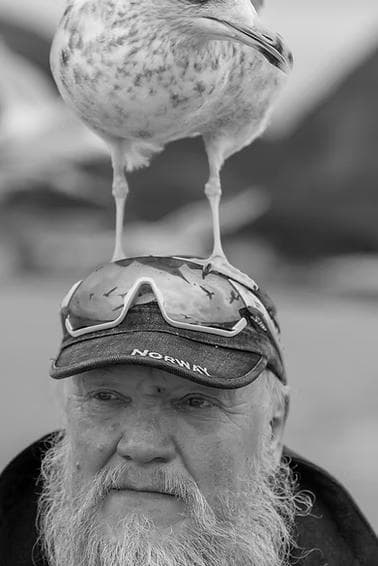
With guidesBrutus Östling, Ole-Martin Dahlé
Brutus Östling
Trip description
"FISH IS OUT, EAGLE IS COMING" shouts Ole Martin Dahle from his position at the helm. Ole Martin handles the boat with a practised hand; he knows where the eagles are, he checks the wind direction, and after throwing out the fish he positions the boat so that we get the eagle either from the side, at an angle from the front, or in the best case almost straight from the front. Everything depends on the circumstances: the direction and strength of the wind and the position of the sun, but also on which eagle it is.
In Ole Martin Dahle's eagle realm in Nord-Trøndelag, there are more than a hundred eagles, if you also count the younger ones. Some thirty nesting sites lie within the boat's reach. We keep a great distance from the nesting sites, but the white-tailed eagles recognise the boat and Ole Martin. It is usually enough for us to approach a territory for the eagles to "know" that some extra fish is on the way, and at this time of year the eagle pairs need to feed their young often.
When Brutus first visited Ole Martin in 2003, he had only three photographers there the whole summer. Brutus visited him for a week, and they were out morning and evening. A successful day meant seven dives, something that felt utterly fantastic at the time. Between the dives, Ole Martin and Brutus would fish up more "eagle fish" in a Norwegian sea that is still alive, especially compared to what we Swedes are used to.
Today the white-tailed eagle nests are even more numerous, and on a really good day there can be ten times as many dives, that is, seventy dives.
Over the years Ole Martin has refined his photographic skills and his homemade technique. No matter which direction the eagle comes from, Ole Martin always makes sure that we "shoot" on the left side of the boat. We never need to hesitate; as the eagle approaches, the boat will lie with its port side towards the direction from which the eagle will make its dive to take the fish. The photographers can concentrate on getting the shots.
We can have special wishes; we may want front light or backlight. It is often possible to arrange for a few dives, but the wind and sun direction determine what is possible at any given moment (and only in exceptional cases do we want to take the pictures of the dive and the eagle's catch from behind).
The white-tailed eagles are the centre of attention, but we also spend time on the somewhat close and hyper-fast Arctic skuas, and during breaks we do "creative" photography with "måker", gulls. Herring gulls and great black-backed gulls are the most common, but there are usually quite a few lesser black-backed gulls and black-legged kittiwakes too.
We run two trips, morning and evening. We have three packed days with opportunities for fantastic pictures that we may previously only have dreamed of.
We are out for up to four hours at a time, morning and evening. Since the days are long – it does not get dark at this time of year – there are many free hours in the middle of the day. Boat trips can be varied with photography from a newly built hide where birds drink and bathe, and in the best case a sparrowhawk or goshawk comes down.
And if you are a beginner, don't worry, you can throw away 95-97% of your images and still come home with pictures you may never have thought you would get.
Six trips in Ole Martin's aluminium boat, specially built for this purpose, unless the weather makes it impossible. We go out in the morning and after the evening meal. Here the sun does not set until around 11 pm and it never gets really dark. Even in bad weather it is usually possible to adjust the times so that we get the most out of it.
We stay in Ørnehuset, a modern, airy and pleasant house beside one of the fjords down on Ole Martin's land. Here we cook some meals ourselves, arrange a "breakfast packet", or visit the village restaurant Zanzibar where Pål, the owner, slips around.
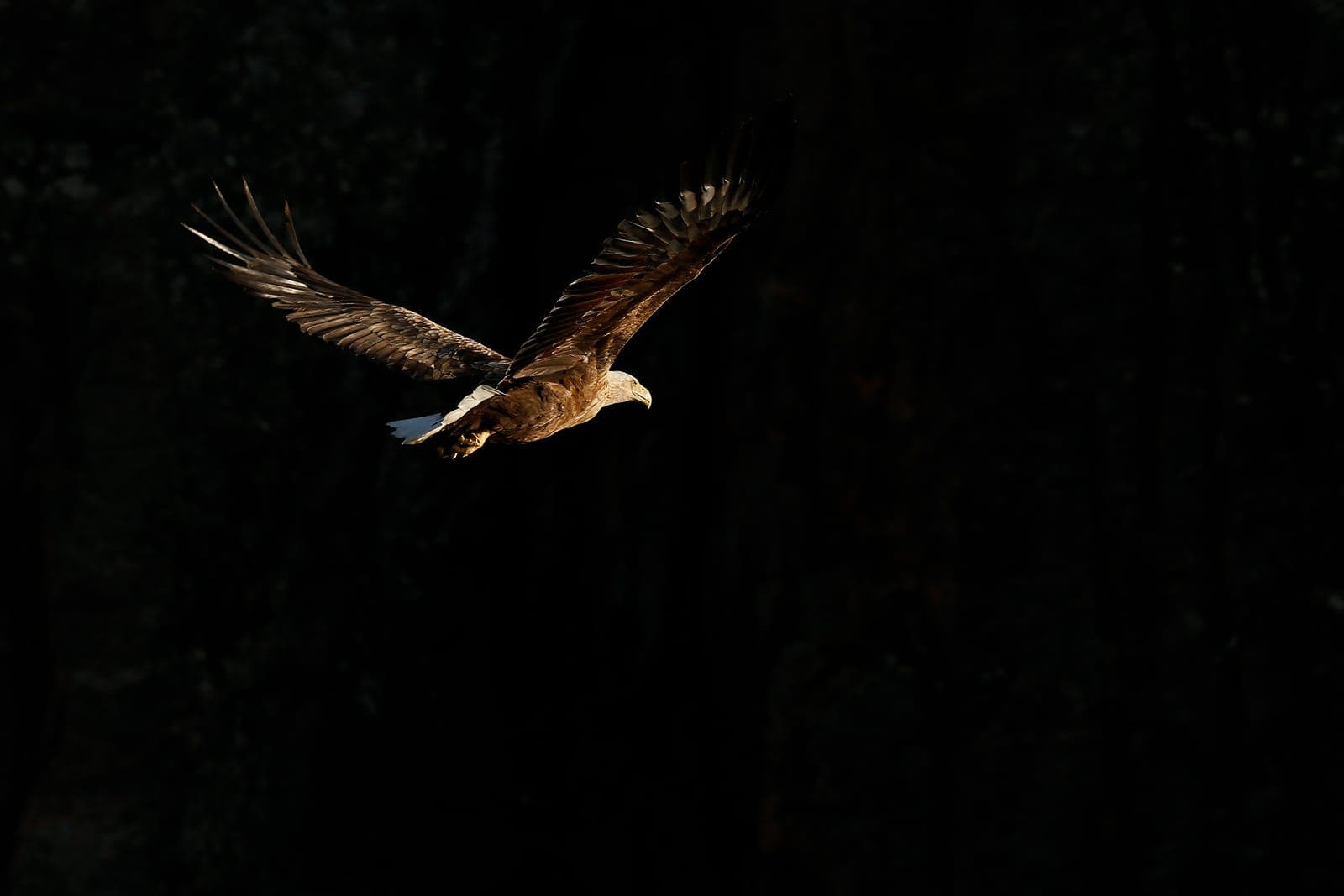
Photograph white-tailed eagles in action in an absolutely magnificent setting. When you come out between the islands or into the fjords between the mighty mountains, it is wilderness, or wilderness sea.
Incredibly many opportunities for action shots you may not even have dreamed of being able to get.
In the breaks between the eagle dives we do a lot of creative photography with "måker", gulls.
Now it is the photography that is at the centre, but at its core it is about a nature experience of the highest order.
Six trips in Ole Martin's aluminium boat, specially built for this purpose, unless the weather makes it impossible. We go out in the morning and after the evening meal. Here the sun does not set until around 11 pm and it never gets really dark. Even in bad weather it is usually possible to adjust the times so that we get the most out of it.
Ole Martin Dahle knows most of the different eagle individuals and every corner of the archipelago. And he knows exactly how to position the boat so that we always get both the best light and the most action opportunities. Each participant can fully concentrate on just getting the shots.
Brutus has had over 100 groups here and helps out with tips and advice.
Guides
Brutus Östling
Travel Guide & Photographer
Brutus Östling, born in 1958 in Stockholm, worked for three decades as a book publisher before breaking through as a bird photographer with his debut book Mellan vingspetsarna (Between the Wingtips) (2005). Since then, he has p...
Read more about BrutusOle-Martin Dahlé
Guide
Ole Martin Dahle, better known as “Eagle Man,” is our local guide in Flatanger. For more than twenty years, he has built up a unique bond of trust with the local whitetailed eagles, allowing them today to come remarkably close...
Read more about Ole-MartinPrice
Clear pricing. Small groups. Focus on the images.
Early bird price
1,740 EUR
≈ $1,990 USD
per person
Normally 1,850 EUR
Save 110 EUR
Valid until 25 November 2026
Shared double room
Booking & peace of mind
Booking deposit
400 EUR
Travel guarantee included
Small group with personal guidance
Planned for the right light, place and pace
You’ll get confirmation and next steps by email.
Photo gallery
Itinerary
The workshop/trip begins and ends in Lauvsnes, Nord-Trøndelag.
Day 1
Arrival at Ole Martin's, no later than 5 pm. The first evening we eat together and Brutus gives a review of photographic technique ahead of the photography. If the weather is bad in the coming days but good this evening, we may go out this evening instead of one of the other trips.
Days 2–3–4
During these days we run two photo trips on the sea, in the morning and in the evening for the best light. In between, rest, photo and image review with Brutus, or perhaps photography from the new water hide. In bad weather the eagle photography on the boat can be swapped for hide photography. But we can also re-plan for a longer trip, if the weather is better, instead of two trips.
Day 5
After breakfast we travel home.
Included in the price
- Shared double room
- Photo instruction and help from the photo guides
- Six boat trips (as long as the weather allows) and local transport are included
Not included
- Travel to and from Lauvsnes
- Meals and so on
- Pick-up at Steinkjer station can be arranged for a certain cost; from the airport an express train runs every hour to Steinkjer, about an hour
Norway
About Norway
Photograph Norway's dramatic nature with sea eagles in Lofoten, moose in the forests, and northern lights over the fjords.
Highlights
white-tailed eagle, moose, Nordic light, fjord landscapes
Best time
Jan, Feb, Jun, Jul, Aug, Sep, Oct
Difficulty
Moderate
Practical information
Regular price SEK 19,700
Early-bird price: SEK 18,400
Valid until 25 November 2026
(Registration fee SEK 4,000, see below)*
Tour leader
Brutus Östling/Ole Martin Dahle
Number of participants
Min 5 / Max 5
Included in the price
Shared double room. Help from the photo guides.
Six boat trips (as long as the weather allows) and local transport are included.
Even if the weather brings strong winds, we can almost always photograph in calm, wind-sheltered fjords. We obviously cannot insure ourselves against a stiff gale or storm, but it is rare for such conditions to drag on. Running a full three days of photography means that even if we are unlucky with the weather on one day, we still have plenty of opportunities for fantastic pictures. By being on site no later than 5 pm on the arrival day, we can also decide to possibly take a first boat trip in the evening, if the weather then is better than expected on the other days. Provided that Ole Martin does not have private matters booked.
Accommodation
We stay in Ole Martin's Ørnehus, a large, spacious and modern house where we can cook our own food, breakfast, lunch/dinner.
Not included in the price
Travel to and from Lauvsnes. Meals and so on. Pick-up at Steinkjer station can be arranged for a certain cost; from the airport an express train runs every hour to Steinkjer, about an hour. We can also help arrange carpooling from Stockholm.
Single room
Supplement SEK 1,800.
Camera equipment
Since we will mainly be photographing birds, telephoto lenses or telezooms are primarily required. A zoom of 80/100-400 mm or 100-500/600, 200–600 mm is excellent. A 70-200 mm zoom is good for landscapes and the Arctic skuas, which come close to the boat. To increase the focal length, a teleconverter can be used in certain situations. A camera body with a crop format turns a 400 mm into 600 or 640 mm in terms of perspective. With a full-frame body, you should also bring a 1.4x converter if the longest lens has a focal length of 400 mm. Since it is action, it is always good if some telephoto lens has good brightness, f/2.8 or f/4 for example. But since you can today raise the light sensitivity (the ISO value) much more than before without the noise becoming disturbing, you manage well even with a brightness of 5.6, or f/6.3, especially now during the light season. If you have access to two camera bodies, it is good to bring both and have slightly different focal lengths on them. This is to avoid having to change lenses.
A standard zoom equivalent to 24 or 28 mm at the wide-angle end (or even wider) is good to have for photographing, among other things, landscapes or gulls that come very close.
Clothing
The temperature varies, usually from 5-10 degrees at night to 10-23 degrees during the day. On the evening trip it can get cooler and we borrow warm flotation suits from Ole Martin. A hat and fingered gloves can be nice late in the evening.
Accessibility
The boat has limitations regarding accessibility. But much can be arranged. Get in touch in good time and ask.
Visa/Passport
Swedish citizens need a passport or national ID card issued by the police. At check-in for flights, a passport is required. In these times everyone must keep track of special rules, and we will of course check everything extra carefully and inform you as much as we can as the date approaches.
*Payment terms
The payment terms differ from our general travel conditions.
The registration fee is SEK 4,000. The remainder is paid 60 days before the trip.
The registration fee is non-refundable in the event of cancellation, regardless of the reason. Cancellation protection is important.
If cancellation occurs later than 60 days before the start of the trip, the traveller is obliged to pay the full price of the trip, even if the final part falls due for payment after the trip has ended.
Our price is calculated based on an exchange rate where the Norwegian krone costs SEK 0.91 (9 April 2025)
Insurance
In cooperation with Europeiska ERV, we offer a complement to your home insurance and a cancellation protection. All so that you can be as secure as possible on your trip. Read more about what the insurance covers and
From past travellers
What they brought home
After the trip, our guests share their photos and reflections. Here is a selection from photographers who have travelled with us before.
Photos from travellers' own camerasPhotos from past travellers
A selection of photos guests shared after the trip.
Good to know
Popular signature expedition
This is one of our most requested tours among wildlife photographers.
See current availability and prices in the booking form above